
REVIEW · MUNICH
Superior E-Bike Tour incl. 3rd Reich Sites & a beer Garden Stop
Munich’s past comes into sharp focus when you pedal from royal squares to places tied to the rise of Nazism. This five-hour ride connects the Feldherrnhalle, Königsplatz, and Haus der Kunst with broader city sights that are hard to fit into one walking tour.
I like two things in particular: the bike lets you cover much more ground than your feet can manage, and the guide can explain the story as you go, not just point at buildings. Guides including Simon, Jack, Will, and Chris have led this route, with Simon noted for pairing doctoral-level history with an easygoing manner.
The main consideration is simple: you need to be comfortable riding a bike in a city. The tour also includes a beer garden stop, but food and drinks cost extra, and the serious subject matter calls for thoughtful attention even when the mood is friendly.
Key points to know before you book
- A five-hour route links Munich’s Nazi-era sites with major city sights, including Odeonsplatz, Königsplatz, Hofbräuhaus, and St-Jakobs-Platz.
- The English Garden provides the longest break, with about an hour for cycling through one of Munich’s largest public parks.
- The Feldherrnhalle and Königsplatz carry especially heavy historical meaning, so this is more than a standard sightseeing ride.
- The group is capped at 14 people, small enough for questions and guide commentary without feeling like a large procession.
- A beer garden stop adds a local pause, but snacks and drinks are not included in the $93.92 price.
- Comfortable clothes, shoes, rain gear, and sunscreen matter, since the ride operates outdoors in changing weather.
Why a bike is the right way to see Munich’s past
Munich’s center is compact, but the important sites are spread across several districts and squares. On foot, you would spend much of the day moving between them. By bike, you can go from Marienplatz through the royal center, across Nazi-era sites, into Schwabing and the English Garden, then back toward the old town.
The e-bike makes the distance easier, though it does not remove the need to ride safely. One practical point deserves attention: this is a real bike tour, not a sightseeing ride with occasional pedaling. You need to know how to ride, follow traffic signals, and manage the bike in an urban setting.
The route begins at Marienplatz at 9:30 a.m. You meet the guide at Marienplatz 15, receive a helmet, and walk a short distance to the bikes because cycling is not allowed in the square itself. That opening walk is useful. It gives you a quick orientation to Munich’s main square before the wheels start turning.
The group size of up to 14 people is a good compromise. It keeps the tour social while giving you a fair chance to hear the guide and ask questions. The format also suits anyone who wants more context than a self-guided ride can provide.
More Beer Gardens in Munich
- Classic Mike’s Bike Tour daily @ 11.30 incl Beer Garden & Surfers
★ 5.0 · 1,246 reviews - Munich: Beer and Food Tour with Dinner & Oktoberfest Museum
★ 4.7 · 1,086 reviews - Munich: Guided City Tour by Bike with Beer Garden Stop
★ 4.7 · 604 reviews
Marienplatz, Hofbräuhaus, and the first look at Nazi Munich
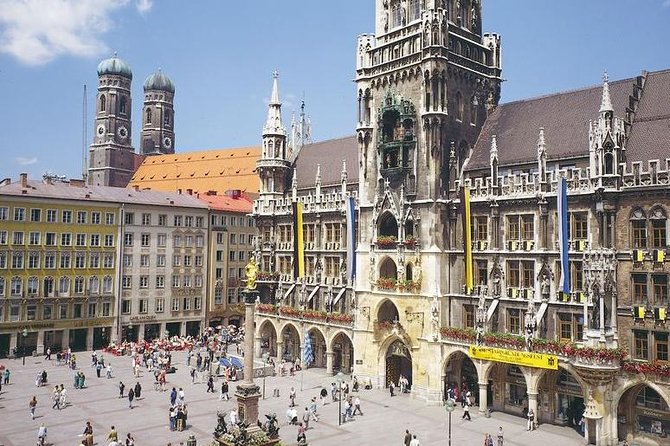
Marienplatz is the right place to begin because it puts modern Munich, medieval Munich, and the city’s political story in one frame. The guide gives you a broad view of the square, then explains how the central area fits into the rest of the route.
From here, the tour moves toward places tied to the early Nazi movement. You pass Hofbräuhaus, the famous beer hall where Hitler delivered one of his first speeches about Nazism. The building is still associated with Munich’s beer culture, so the historical contrast can feel unsettling. You are looking at a popular public place while hearing how it was used in a very different political setting.
The guide also points out the former headquarters of Hitler’s first political party, the National Socialist German Workers Party, or NSDAP. These details help explain why Munich is often called a key city in the early Nazi story. You are not simply hearing about events that happened elsewhere. You are moving through the streets where the movement organized, spoke, marched, and tried to seize power.
The ride includes regular pauses for explanation. That matters because the subject is not easy to absorb while moving. You can stop, listen, ask questions, and then continue with a clearer sense of how the sites connect.
Odeonsplatz and the Feldherrnhalle: a failed putsch remembered
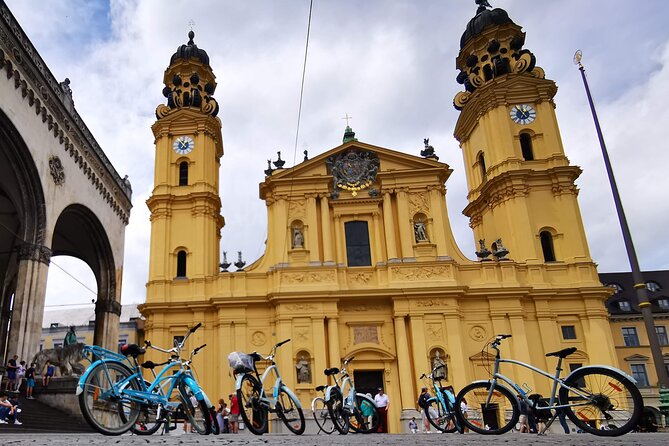
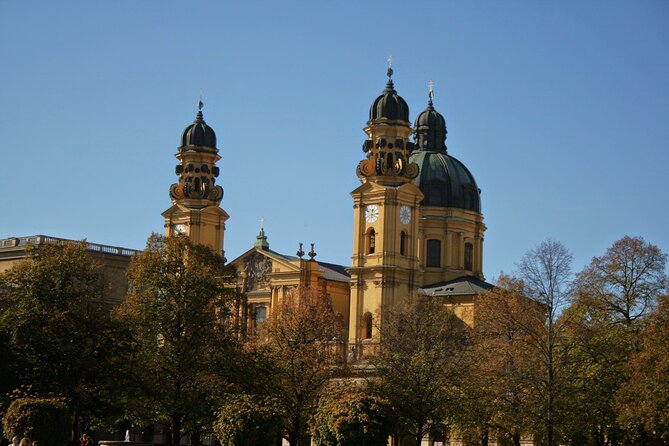
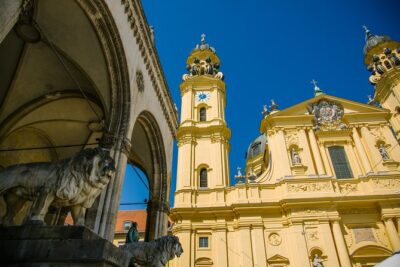
Odeonsplatz is one of Munich’s grandest squares, framed by the Theatinerkirche and the Feldherrnhalle. Its architecture reflects the ambitions of Bavaria’s royal rulers, who wanted a formal public space near the Residenz.
The square also carries the memory of the failed Beer Hall Putsch of 1923. The confrontation at the Feldherrnhalle between Nazi supporters and Bavarian police left several people dead and became a key event in Hitler’s rise. The guide can explain why a failed coup became part of Nazi propaganda rather than the end of the movement.
The Feldherrnhalle itself was built as a monument to the Bavarian army. Under the Nazi regime, it was turned into a shrine for the men killed during the putsch. SS guards were stationed there, and locals were expected to give the Nazi salute. After the war, the Nazi symbols were removed.
I find this one of the most important stops on the route because the building’s appearance does not tell you what it was used for. Without context, it is just an elegant loggia. With context, it becomes a place where royal symbolism, political violence, and propaganda meet.
Max-Joseph-Platz and Königsplatz reveal Munich’s changing identity
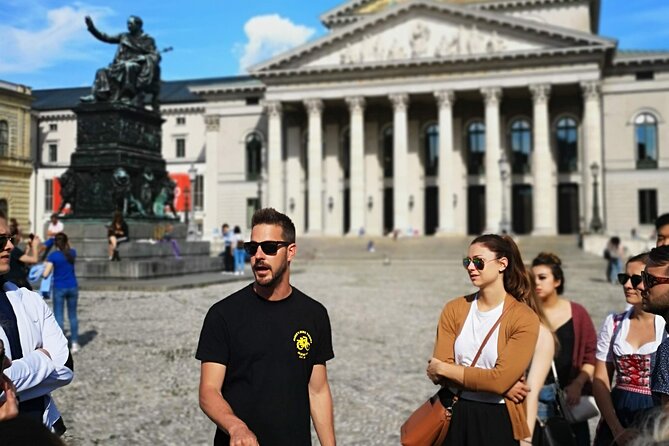
Max-Joseph-Platz brings the tour back to Munich’s royal and cultural side. The Residenz occupies one edge, while the National Theatre, home of the Bavarian State Opera, adds a strong connection to music and performance.
The square helps balance the tour. Munich was not shaped only by the Nazi period. It was also a royal capital and an important center for the arts. Seeing these layers in sequence makes the city easier to understand.
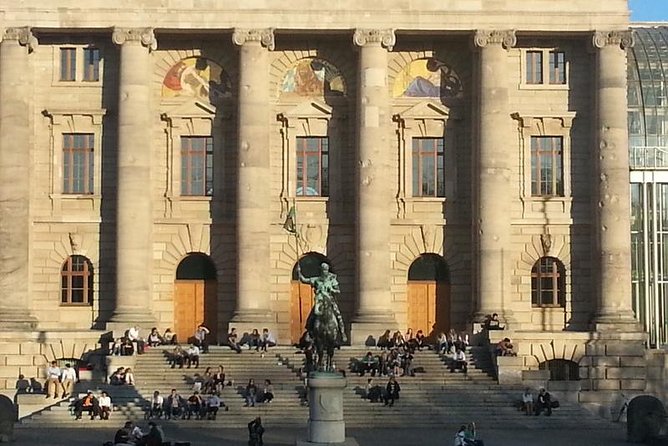
Königsplatz carries a sharper political charge. King Ludwig I commissioned it in the 19th century with classical Greek design in mind. The Glyptothek and the State Collection of Antiquities helped make the area a center for art and ancient culture.
The Nazi government later used Königsplatz for rallies and propaganda events. The Brown House, the Nazi Party headquarters, was nearby. The square’s open design made it useful for mass gatherings, which changed its meaning from a cultural setting to a stage for political power.
Today, Königsplatz again functions as a public square with museums and classical buildings. Yet the earlier use is not erased. This is where a strong guide adds real value. The buildings alone show beauty and order. The historical explanation shows how public spaces can be used to shape political feeling.
More Beer Gardens and Oktoberfest Tours in Munich:
- Munich: Bike Tour with Beer Garden Break
★ 4.9 · 391 reviews - Munich City Bike Tour + Beer Garden Lunch Stop
★ 5.0 · 283 reviews - Munich City Walk and Oktoberfest Tour With Beer Tent Reservation
★ 5.0 · 275 reviews - Munich Oktoberfest Tour With Hofbräu Beertent Tickets, Beer, Food
★ 4.5 · 256 reviews
Schwabing and the English Garden bring a different side of Munich
The route continues through Schwabing, once an independent village and later a home for artists, writers, and intellectuals. Wassily Kandinsky, Paul Klee, and Thomas Mann are among the figures linked with the district.
Schwabing’s story provides a useful counterpoint to the political sites. Its identity grew from art, literature, student life, and a less formal social spirit. Today, it is known for cafes, restaurants, shops, nightlife, and a more polished version of its old bohemian character.
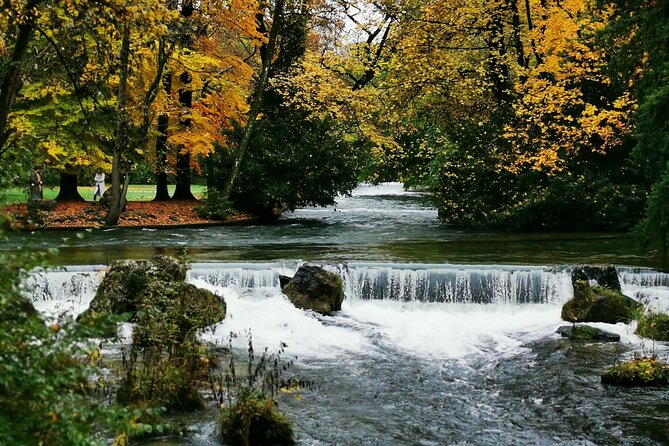
The English Garden is the longest scheduled stop, at about one hour. This is where the tour gets a welcome change of pace. You can ride through broad green spaces, follow bike paths, and see why the park is such an important part of daily life in Munich.
The park is larger than New York’s Central Park and includes several well-known sights. The Chinese Tower has a beer garden, the Eisbach Wave attracts surfers, and the Monopteros offers a classical temple-like viewpoint. The tour information does not promise a dedicated stop at each of these, so think of the hour as time to experience the park within the route rather than a checklist of every feature.
The English Garden also gives you a chance to rest your mind. Five hours of political history can be intense. A park ride and a beer garden pause make the day feel more varied, even though the tour’s central theme remains serious.
Haus der Kunst and St-Jakobs-Platz add difficult but necessary context
Haus der Kunst was commissioned by Hitler and opened in 1937 as the House of German Art. It was intended to display art approved by the Nazi regime while attacking what the government labeled degenerate art.
That background makes the building more than a museum facade. Its original purpose was tied to state control over culture and public taste. After the war, it became a museum for international contemporary art and now presents exhibitions that engage with art and society, including the building’s own difficult past.
The stop is brief, listed at about five minutes, so do not expect an indoor museum visit. You see the site and hear why it matters. If you want to explore current exhibitions, plan a separate visit.
St-Jakobs-Platz brings the tour to the Jewish heart of Munich and the site of the new Jewish Synagogue. This part of the route helps widen the story beyond Nazi leadership and military sites. You also hear about resistance fighters and memorials dedicated to people who opposed the Third Reich.
That inclusion matters. A tour about Nazi Munich should not focus only on Hitler, party offices, rallies, and monuments. The story also includes people who resisted, communities that suffered, and the city’s efforts to remember what happened.
The beer garden stop keeps the five-hour ride human
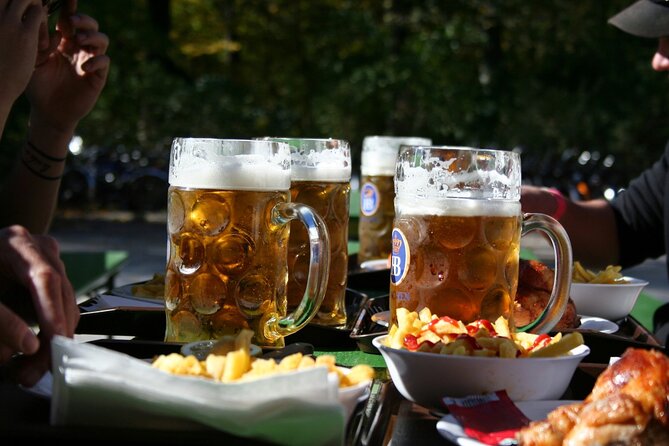
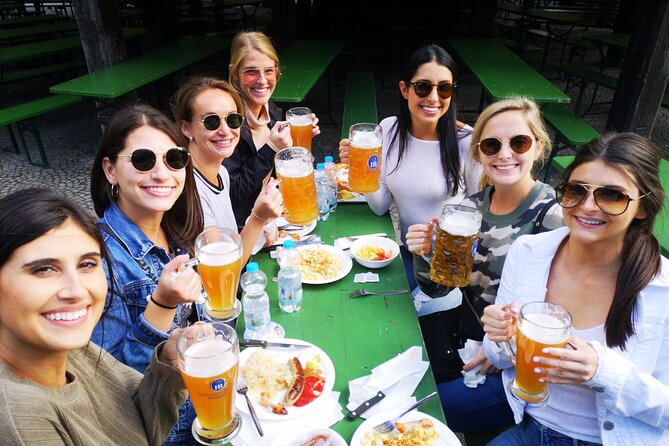
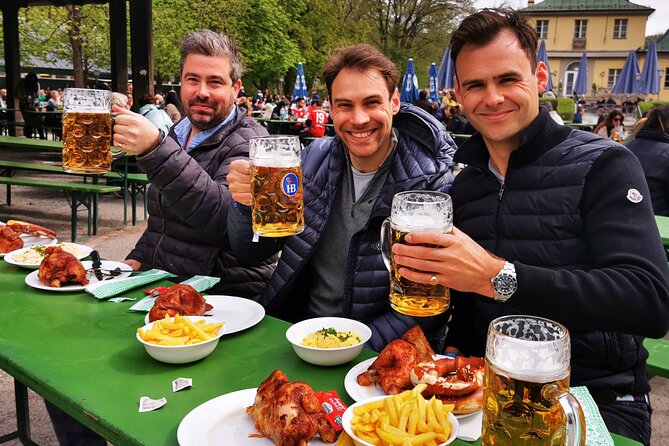
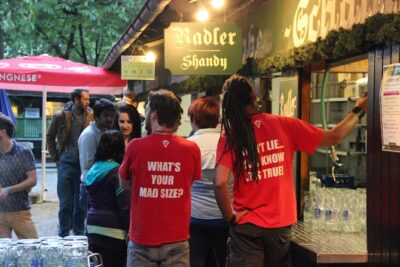
A traditional Munich beer garden stop breaks up the route. You can buy snacks and drinks at your own expense, rest for a while, and speak with the guide in a less formal setting.
The stop is not included in the price, so bring money or a payment method suitable for the purchase. Since the food is optional, you can keep the break light or make it a more substantial pause, depending on your appetite.
I like this part of the design because it reflects how Munich is actually experienced. The city’s beer gardens are social places, not just photo stops. At the same time, the pause does not turn the tour into a drinking outing. The historical route remains the main event.
Price, timing, and practical value
At $93.92 per person, the tour is not the cheapest way to see Munich. You are paying for about five hours, bike and helmet use, a professional guide, and a route that covers a broad section of the city.
The value improves if you want both history and general sightseeing. In one morning, you see Marienplatz, Hofbräuhaus, the royal squares, Nazi-era sites, Schwabing, the English Garden, Haus der Kunst, and St-Jakobs-Platz. A walking tour could explain some of these places in greater detail, but it would be hard to cover the same distance.
The guide is the main reason to book rather than rent a bike independently. Simon has been praised for explaining a thousand years of German history, while Jack, Will, and Chris have led tours described as friendly, clear, and energetic. Chris, in particular, is noted for keeping the tone upbeat without making light of the subject.
You should also note what the price does not cover. Hotel pickup and drop-off are not included, nor are food and drinks. The tour begins and ends in central Munich, making it practical if you are already near the old town. It finishes at the Discover Bavaria Shop, at the corner of Hochbrückenstrasse and Bräuhausstraße 10.
Free cancellation is available up to 24 hours before the 9:30 a.m. start time. Changes or cancellations inside that period are not accepted for a refund.
Who will get the most from this Munich bike tour?
I would choose this tour if you want a strong first look at Munich and prefer movement to standing in a square for long periods. It is especially useful early in a visit because you get an overview of major sights and can decide which museums or memorials deserve a return visit.
It also suits history-minded riders who want the Third Reich story tied to exact places. The tour does not treat the past as a distant lecture. You see the squares, buildings, and streets where events unfolded.
You may prefer a walking tour if you want to spend longer at each memorial, enter museums, or avoid riding in city traffic. This route gives you breadth more than extended time at any one site.
Wear comfortable clothes and shoes, and bring rain gear. Sunscreen is sensible in summer. Most people can take part, but the essential test is your comfort on a bike and your ability to follow road signs and signals.
Should you book the Superior E-Bike Tour?
Book it if you want to cover much of Munich in five hours, value clear historical commentary, and are comfortable riding. The combination of Nazi-era sites, royal squares, the English Garden, Jewish Munich, and a beer garden break gives you far more than a single-theme ride.
Skip it if you dislike cycling, need a slow indoor museum visit, or want a narrowly focused memorial tour. For the right rider, the $93.92 cost is fair because the bike expands the route and the guide supplies the context that buildings alone cannot provide.
FAQ
How long does the Superior E-Bike Tour last?
The tour lasts approximately five hours and begins at 9:30 a.m.
Where does the tour begin?
It begins at Munich Stories, Marienplatz 15, 80331 Munich. You first meet the guide at Marienplatz, then walk to the bikes because cycling is not allowed in the square.
Where does the tour end?
The tour ends at Mike’s Bike Tours and Rentals, at the corner of Hochbrückenstrasse and Bräuhausstraße 10, 80331 Munich. The group finishes at the Discover Bavaria Shop.
Are bikes and helmets included?
Yes. The tour includes use of a bike and helmet, along with a professional guide.
Are food and drinks included?
No. Food and drinks are your own expense. The route includes a stop at a traditional Munich beer garden.
How large is the tour group?
The maximum group size is 14 people.
What happens if I need to cancel?
You can cancel up to 24 hours before the local start time for a full refund. Cancellations or changes made less than 24 hours before the start are not accepted for a refund.
More E-Bike Tours in Munich
- THE Wilmington History, Haunts & Breweries E-Bike Tour (4 hr)
★ 5.0 · 113 reviews - 3-Hour E-Bike Sightseeing and Breweries Tour in Roanoke
★ 5.0 · 66 reviews - Portland Oregon Breweries By Bike and E-bike
★ 5.0 · 55 reviews - E-Bike City Tour Medellin with Local beer and Snacks
★ 4.9 · 55 reviews
Just added around Munich
- Dragon Slayer Way Beer Hike Food Experience Private Tour (departs Munich)★ 5.0 · 7 reviews
- VIP Oktoberfest experience with table in big beer tent★ 5.0 · 28 reviews
- Self-guided Beer-Tour of Munich: Main Sights, Beer & Breweries★ 5.0 · 4 reviews
- Private Oktoberfest: Lunch, Beer & Bavarian Gemütlichkeit★ 5.0 · 6 reviews
- Private Munich History and Beer Culture Walking Tour★ 5.0 · 4 reviews
- Munich Oktoberfest Guided Experience with Beer and Food★ 5.0 · 65 reviews
- Private VIP Oktoberfest, Table, 3-Course-Menu, Beer & Champagne★ 5.0 · 6 reviews
- Munich: Oktoberfest Lunch/Dinner table reservation big beer tent★ 3.0 · 42 reviews
Munich Beer Tours, compared.

Bavarian Beer and Food Evening Tour in Munich
Read our review →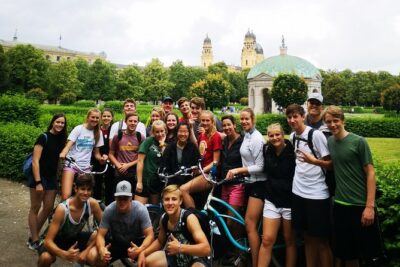
Classic Mike’s Bike Tour daily @ 11.30 incl Beer Garden & Surfers
Read our review →
Beer and Food Tour with Dinner & Oktoberfest Museum
Read our review →
Munich’s Beer Halls and Breweries: 3-Hour Guided Tour
Read our review →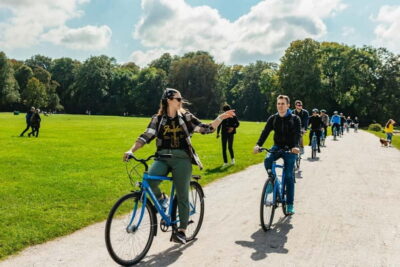
Browse the lists this tour appears in