
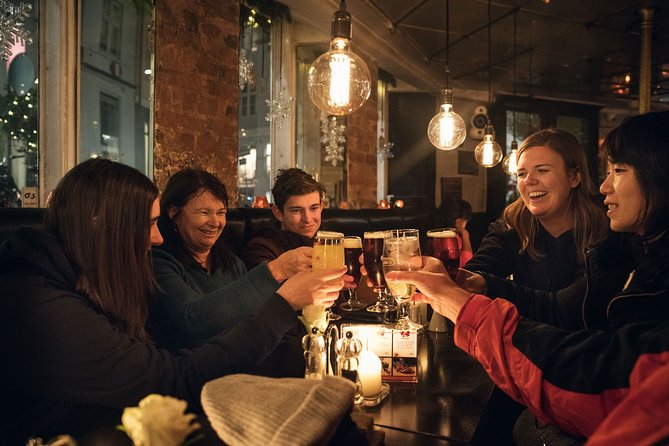
REVIEW · COPENHAGEN
Vesterbro Tour With Beer & Pub Visits – Max 10 People
Vesterbro is where Copenhagen’s polished image gets pleasantly rumpled. On this three-hour walk, you move from the old red-light district and smoky brown bars to Mikkeller’s clean-lined craft-beer room and the restaurants of the Meatpacking District. The beer is the hook, but local stories are the real meal.
I like two things here. First, the small maximum of 10 people gives guides such as Kenneth, Oskar, Liva, and Lucas room to talk with you rather than lecture at you. Second, the route shows how one neighborhood changed without wiping away every trace of its rougher past. The drawback is clear: one traditional bar may allow indoor smoking, and the $72.59 price is a lot if you only want three beers.
Key points to know before booking
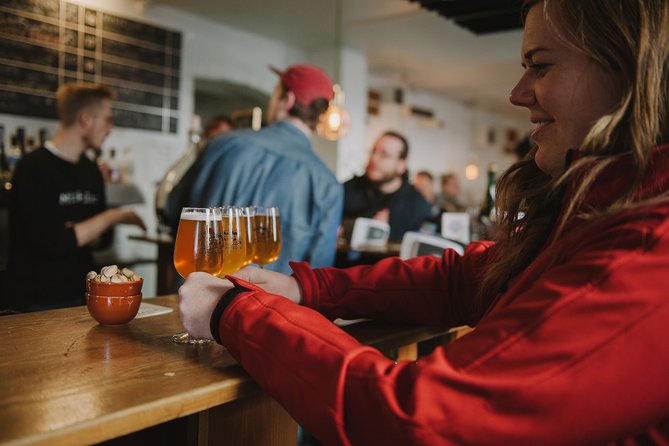
- Three different beer settings: Try a classic Danish pilsner in a traditional brown bar, a craft beer at Mikkeller, and another local brew at Fermentoren.
- Vesterbro beyond the postcard: The route covers Istedgade, Viktoriagade, the French Quarter, Skydebanehaven, Sønder Boulevard, and the Meatpacking District.
- A neighborhood history walk first: Expect stories about prostitution, Carlsberg workers, WWII, graffiti policy, royal shooting grounds, and urban renewal.
- Small groups matter: The tour accepts no more than 10 people, and solo visitors can get plenty of conversation.
- Smoking is a serious consideration: The first bar may be smoky, so this is not a comfortable choice for anyone with asthma or strong smoke sensitivity.
- A useful finish: The walk ends near Halmtorvet and the Meatpacking District, with dinner suggestions from the guide.
Why Vesterbro makes a better beer walk than a city-center pub crawl
The appeal of this experience is not simply drinking Danish beer in three bars. It is seeing how Vesterbro holds several versions of Copenhagen in a compact area.
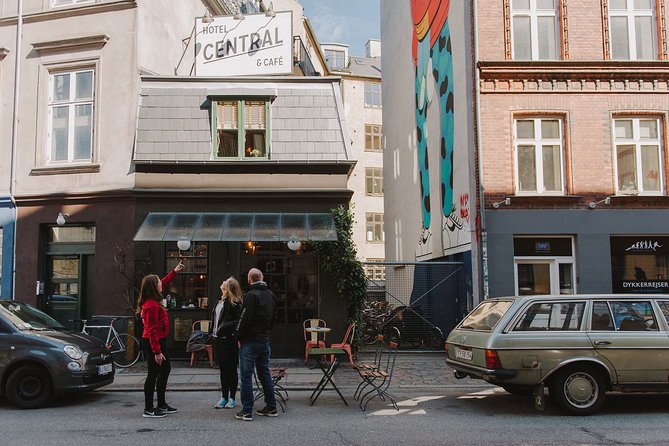
Near Central Station, the tour begins at Reventlowsgade 7, in front of the gates that once marked the entrance to Copenhagen. Your guide sets up the neighborhood’s story there. Vesterbro was shaped by workers, travelers, nightlife, prostitution, drugs, and heavy industry. Parts of that past remain visible, even as cafés, galleries, design shops, and restaurants have moved in.
I like that the guide does not treat the district’s rougher past as something to hide. Istedgade, once known across Denmark for prostitution and drug activity, is now safe to walk through. The tour explains how government programs helped the area change while leaving some of its old character intact.
That approach gives you more than a quick list of landmarks. You learn why a street feels the way it does, why some bars look unchanged, and why new businesses sit comfortably beside places with a much older working-class identity.
The walk starts at 3 p.m. and lasts about three hours. The amount of walking is relatively low, though comfortable shoes still make sense. You are moving between stops, but the main rhythm is a short walk, a story, a beer, and time to sit.
A few more beer tours around the world worth a look
- Budapest: Unlimited Prosecco, Beer and Aperol Spritz Cruise
★ 4.8 · 37,304 reviews - Bangkok: White Orchid Chao Phraya Dinner Cruise free Beer
★ 4.4 · 4,573 reviews - Laid back, Yarra Valley Wine Tour: Wine, Cider, Gin, Beer + Choc
★ 5.0 · 4,552 reviews
Central Station and Istedgade: getting the old Vesterbro story
Meet your guide 10 minutes before the start. The meeting point is close to Copenhagen Central Station, but one rating noted that finding the guide was not as easy as it should have been. I would arrive early and look carefully around the front of the gates rather than wait until 3 p.m. sharp.
The opening talk lasts about 15 minutes. This is useful orientation because Vesterbro can look like a jumble of bars, apartment blocks, busy streets, and renovated buildings until someone explains the forces behind it.
The Istedgade stop is brief, about five minutes, but it frames much of the tour. The street once carried a darker reputation, and the guide explains how Copenhagen dealt with that past through public programs and planning changes. You are not being asked to pretend the old Vesterbro never existed. You are being shown how a city can improve safety and public space without erasing its memory.
This is also where the guide’s personality begins to matter. Kenneth is praised for humor and easy conversation, while Oskar is often appreciated for making the darker side of the district approachable. The exact guide is not guaranteed, but the strongest part of this tour depends on getting someone who enjoys connecting city history with ordinary street life.
Freddy’s Bar: a real look at the Danish brown bar
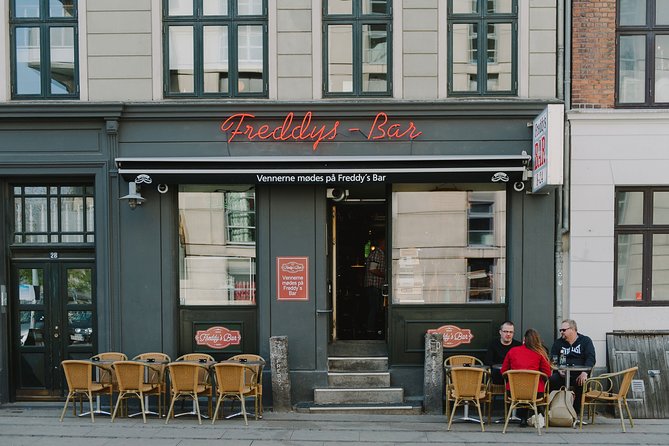
The first beer stop is Freddy’s, a traditional Danish bar with the sort of worn, communal feel that modern cocktail rooms cannot reproduce. You receive one classic Danish pilsner and sit for about 30 minutes.
This is the most culturally revealing stop for many people. The guide talks about Carlsberg workers and the working-class men who used to come to bars like this after a shift. These places were not only for alcohol. They were social rooms, meeting points, and part of neighborhood life.
The tour uses Freddy’s to explain the contrast between a brown bar and a newer white bar. Brown bars tend to be old-fashioned, informal, and low-key. The décor may be plain, the regulars local, and the atmosphere more lived-in than designed.
There is an important warning here. Indoor smoking may be allowed at this stop. Several people enjoyed the authenticity but disliked the smoke, and one person specifically noted that the tour should make this clearer before booking. If you have asthma or smoke bothers you, ask the operator in advance or consider choosing another type of Copenhagen beer outing.
I still see value in this stop for the right person. If you want only spotless, smoke-free rooms, it may be the weakest part. If you want to understand the social history of Danish pubs, it gives the rest of the tour a useful starting point.
The Meatpacking District: industry turned into nightlife
After Freddy’s, the route passes through Copenhagen’s Meatpacking District. The old industrial buildings have been adapted for restaurants, bars, shops, and creative businesses. The tour walks through all three sections of the district and explains how the area shifted from working meat production to one of Vesterbro’s most popular evening zones.
This is a good place to pay attention to the change in architecture. The buildings are not merely old shells placed behind fashionable restaurants. Their original purpose helps explain the district’s scale, layout, and plain industrial look.
The timing also matters. You finish close to the Meatpacking District, so you can return later for dinner or drinks. The guide can suggest nearby places, but your meal is not included. I would keep this in mind when comparing the price with a standard tasting tour. Part of what you pay for is the route and the local guidance, not a full evening of food.
Same city, a different glass:
- Prague: Bernard Beer Spa with Beer and Massage Option
★ 4.8 · 4,164 reviews - Bruges: Guided Tour & Boat Ride with Optional Beer Tasting
★ 4.4 · 3,894 reviews - Prague: Pilsner Urquell Experience & Beer Tasting
★ 4.7 · 3,480 reviews - Budapest: Unlimited Prosecco, Beer & Aperol Spritz Cruise
★ 4.5 · 3,371 reviews
Viktoriagade and the small details locals notice

Viktoriagade is a short stop, about five minutes, but it carries symbolic weight. Your guide points out a place that may look ordinary to you but means a lot to locals as a sign of Vesterbro’s rebellious and chaotic past.
If the guide has a pen, you may be invited to make a small drawing there. The activity is allowed, and it gives the stop a slightly playful quality. It is a reminder that neighborhood identity does not always sit inside a museum or on a bronze plaque.
The route then passes the New Theatre. Here, the guide points out a small detail on the building as the walk crosses from Vesterbro toward Frederiksberg. Another stop focuses on a charming little building with an upper floor and one window. These moments are easy to miss on your own, which is one reason a local walk can be more useful than a map-based stroll.
The tour does not promise grand monuments every few minutes. Instead, it asks you to notice small signs, odd corners, and details with local meaning. That style suits people who enjoy street-level history more than a parade of famous sights.
Mikkeller: Copenhagen’s craft-beer turn
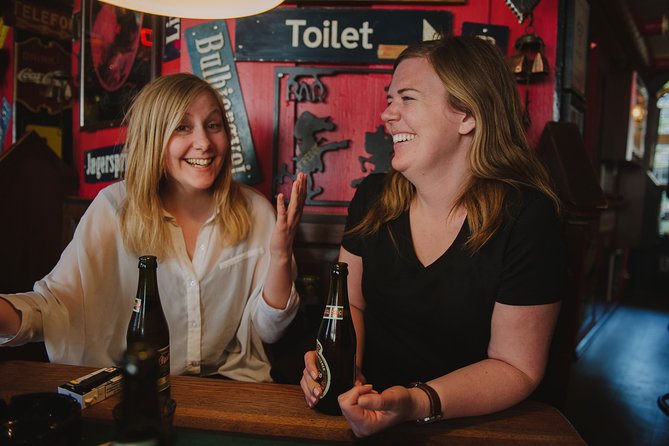
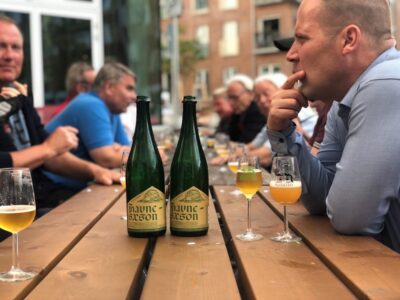
At Mikkeller Bar, you sit for about 30 minutes and receive one craft beer. The setting is a sharp contrast to Freddy’s. Where the first bar represents an older, working-class pub culture, Mikkeller shows Copenhagen’s modern craft-beer identity.
The guide tells the story of two siblings who turned an interest in brewing into a beer brand that became widely known. This is also where the business began, so the bar carries more meaning than a random place serving the same label elsewhere.
You may be able to try one of the four original beers that helped launch the brand. Beer choices can vary, and the tour is not designed as a technical brewing class. You will learn more about the people, bar culture, and city than about brewing chemistry or production methods.
That distinction is worth understanding. If you want detailed lessons about malt, yeast, fermentation temperatures, or brewing methods, choose a specialist beer tour. If you want to connect a famous Copenhagen beer name with the city’s changing social style, Mikkeller fits very well.
Guides often help with beer selection, especially if you are unsure what you like. One guide was praised for offering alternatives to suit personal preferences. Even people who do not usually choose beer can find this stop manageable because the tasting is part of a broader conversation rather than a test of beer expertise.
Westend, Skydebanehaven, and Sønder Boulevard
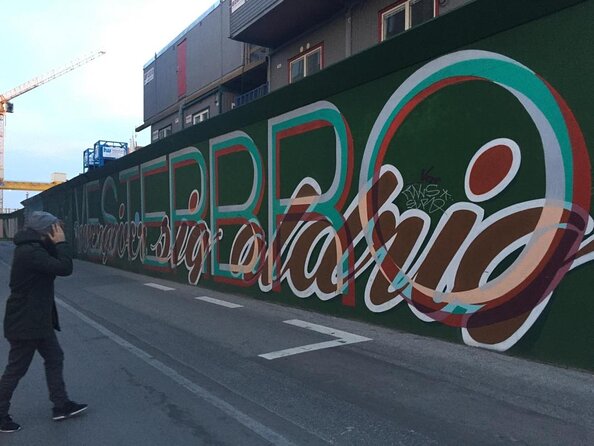
The route continues through the French Quarter toward Westend, where you see graffiti pieces approved by the municipality. The guide explains why sanctioned graffiti spaces matter in an old city such as Copenhagen.
This is a useful point of balance. The tour does not treat all graffiti as either vandalism or art. It shows how a city can allow public expression while protecting historic streets and buildings. The stop lasts about 10 minutes, so expect a quick explanation rather than a full art tour.
At Skydebanehaven, the guide opens a gate and reveals a green space that may look as if it should contain a castle. Instead, you learn about its former use for royalty and the wall built beside it. The story also explains the Danish phrase To Shoot the Parrot, which originated here.
This is the kind of local detail that gives the walk its personality. You are not only hearing dates and names. You are learning why a strange wall exists and how a playground connects to older royal customs.
Sønder Boulevard shows the more recent side of Vesterbro’s change. It was once polluted and crowded with traffic. Planning changes in the late 1990s helped turn it into a green place where locals relax.
I like this section because it makes urban renewal visible. You see that improvement is not only about new bars and higher rents. It can also mean cleaner public areas, safer streets, and room for people to sit outside.
Fermentoren: the flexible final stop
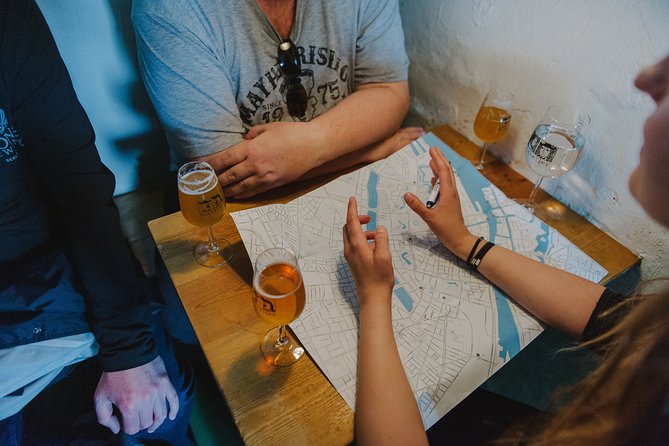
The final beer stop is Fermentoren, a local beer bar near Halmtorvet and the Meatpacking District. It is used when the group does not stop outside for a beer or when weather makes outdoor drinking impractical. You receive the second craft beer here.
Fermentoren combines the cozy feel of the traditional bar with the broad beer selection of the modern craft scene. Taps change weekly, so the exact choices are not fixed. If the list feels overwhelming, you may even roll a die to select one.
The stop lasts about 30 minutes. You can stay as long as you like after the formal tour, and the guide can point you toward dinner nearby. This is a practical ending because you are already in one of Copenhagen’s best areas for an evening meal.
Weather can affect the exact flow. Bring an umbrella or rain jacket, especially for a 3 p.m. start when the walk may continue through changing conditions. The guide may adapt the beer stop, but the route remains an outdoor neighborhood walk.
What the $72.59 price really buys you
At $72.59 per person, the tour is not cheap if you count only the drinks. The included package is one traditional Danish beer, two craft beers, a three-hour guided walk, and personal suggestions for exploring Copenhagen afterward.
The value improves if you would otherwise spend time trying to find these bars and understand the district on your own. You are paying for access to local context, small-group conversation, and a planned route through places that are easy to overlook.
The value drops if you mainly want beer education or a large number of tastings. You get three beers, not a full meal, and food, extra drinks, tips, and dinner are separate. One person felt the price was high for walking around and drinking three beers, and that criticism is fair.
Guide quality also affects the calculation. Kenneth receives especially strong praise for humor, warmth, city knowledge, and the ability to make solo visitors feel included. Oskar is often associated with good historical facts and beer suggestions. Liva has been praised for combining beer knowledge with stories about Copenhagen and WWII. Lucas is described as easygoing and informative.
Those names give you a sense of the tone, but you may not be able to select a guide when booking. The small group helps, though. If the other bookings do not show, the experience can become nearly private, as happened for some participants.
Who should book this Vesterbro walk?
I would choose this tour if you want a neighborhood introduction with beer, not a formal tasting class. It suits first-time visitors who have already seen central Copenhagen and want a more local-feeling afternoon.
It also works well for solo visitors, couples, and friends who like talking with a guide and other people. The group limit of 10 keeps the experience personal, and the moderate walking makes it less demanding than a full-day city tour.
You should think twice if you cannot tolerate cigarette smoke, are under 18, or want a smoke-free bar route. Passengers under 18 are not permitted. Service animals are allowed, and most people can take part, but comfortable shoes remain sensible.
The tour is offered in English. Confirmation arrives when you book, and free cancellation is available up to 24 hours before the start time. If you need to cancel later, the payment is not refunded.
Should you book it?
Book this tour if you want Vesterbro’s character explained from the inside, with three beers serving as the thread between old pub culture, craft brewing, street art, and city planning. The strongest reason to go is the guide-led conversation, especially if you are lucky enough to get the relaxed humor associated with Kenneth, Oskar, Liva, or Lucas.
Skip it if you only want premium beer, a technical brewing lesson, or a low-cost pub crawl. The smoky first bar is a real issue, and the price asks you to value stories and local orientation as much as the drinks.
For the right audience, this is a smart first afternoon in Vesterbro. You finish near restaurants and nightlife, with enough context to keep exploring on your own.
FAQ
How long does the Vesterbro beer tour last?
The tour lasts approximately three hours and begins at 3 p.m.
Where does the tour start?
The meeting point is Reventlowsgade 7, 1651 København, Denmark, near Copenhagen Central Station.
Where does the tour end?
The tour ends at Halmtorvet 27E, 1700 København, close to the Meatpacking District, restaurants, bars, and evening entertainment.
How many beers are included?
You receive one traditional Danish beer and two craft beers. Additional food and drinks cost extra.
Is the tour offered in English?
Yes. The tour includes a native English-speaking guide.
Are people under 18 allowed to join?
No. Passengers under 18 are not permitted on this tour.
Is smoking possible at any of the bars?
Yes. The traditional bar stop may allow indoor smoking. Outdoor seating is available in some places, but anyone with asthma or strong smoke sensitivity should plan carefully.
What happens if it rains?
Bring an umbrella or rain jacket. If weather prevents an outdoor beer stop, the group may go to Fermentoren Beer Bar instead.
Just added around the world
- Zaanse Schans: Brewery HOOP Tour and Tasting★ 3.4 · 4 reviews
- Würzburg: Unique Brewery Tour with Beer Tasting★ 5.0 · 2 reviews
- Zurich Beer Tour – tasting tour with a local beer expert★ 5.0 · 3 reviews
- Wildlife Center with Lunch & Local Beer Sampling★ 5.0 · 6 reviews
- Warstein: Warsteiner World Brewery Tour★ 4.6 · 3 reviews
- Warsaw: Guided Craft Beer Tour with a Friendly Guide★ 5.0 · 4 reviews
- Warsaw Private Polish Beer Tasting Tour at Best Pubs & Bars★ 4.4 · 4 reviews
- DAILY Beer Tasting Private Guided Tour at Best Warsaw Pubs★ 3.9 · 8 reviews
Copenhagen Beer Tours, compared.

Politically Incorrect Beer Tasting Walking Tour
Read our review →
Browse the lists this tour appears in