
REVIEW · JAPAN
Unique Brewery Tour and One-of-a-Kind Sake Tasting Near Tokyo
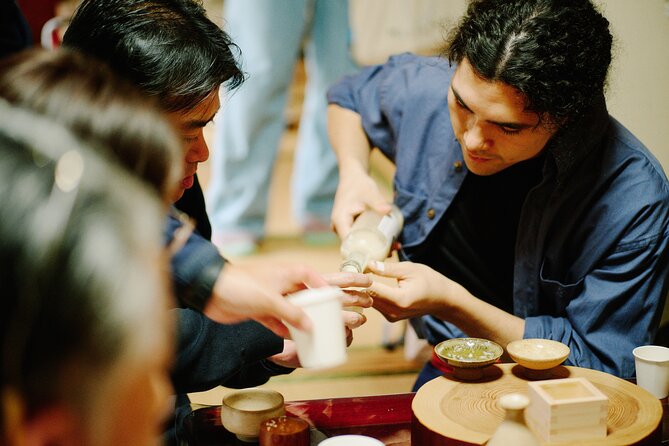
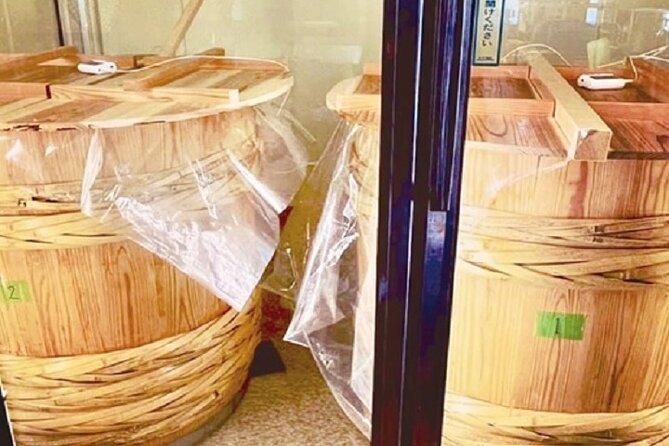
The rarest part of this Hanno outing is the sake itself. Doburoku is unfiltered, still-fermenting sake bottled with its mash, so it is hard to keep and seldom found in ordinary restaurants. At Yamane Brewery, it is made in small batches inside a former convenience store, using wooden barrels rather than standard steel tanks.
I like the strong sense of place here: local Nishikawa timber shapes the brewing, and limited-edition cups made from 100% Hanno soil hold the tasting. I also like the small group size, capped at eight, which gives you room to ask questions of hosts such as Fukunari and the brewery owner, Mr. Wakabayashi. The main drawback is practical: transport and lunch cost extra, and the tour begins at 1:00 p.m., so it is not a full-day Hanno sightseeing plan.
Key points about Yamane Brewery
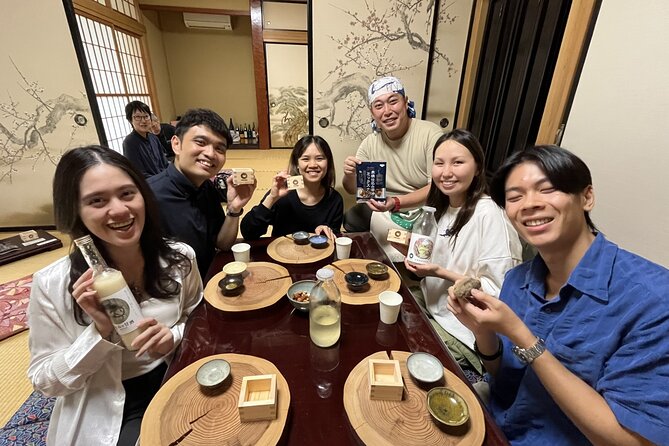
- Rare doburoku tasting: Try three types of unfiltered sake that continue fermenting after bottling.
- Wooden-barrel brewing: Yamane uses local Nishikawa timber instead of the stainless steel tanks common at larger breweries.
- A former convenience store: The brewery’s setting is modest and unusual, with small-batch production replacing a shop built for everyday errands.
- Hanno-made tasting cups: The cups are made from 100% local Hanno soil, a material no longer produced and available only in limited quantities.
- Small, personal group: The maximum is eight people, with a guide-led walk, bus ride, brewery talk, tasting, and snacks.
- Easy rail access from Tokyo: Hannō is about an hour by train, and the town also works well with visits to Chichibu, Kawagoe, or Moominvalley Park.
Why this sake tour feels different
Many sake brewery visits focus on scale, polished facilities, and tanks lined up in neat rows. Yamane Brewery offers something more hands-on and local. The operation is small, the methods are traditional, and the setting has a personal connection to the people making the sake.
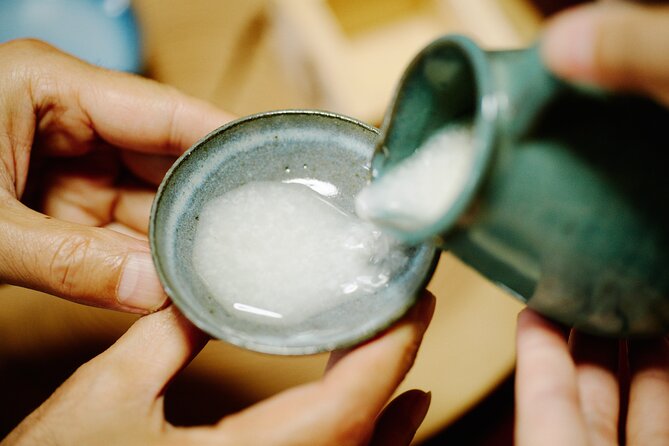
Doburoku is the star. Regular sake is usually pressed to separate the liquid from the rice solids before bottling. Doburoku keeps the unfiltered mash, giving it a cloudy appearance and a texture that can feel fuller and more rustic. Since fermentation continues, it is difficult to store and is not the sort of bottle you can expect to find on every restaurant menu.
Yamane makes this style in limited batches. That matters for two reasons. First, the tasting is not a standard run through widely available commercial labels. Second, the sake may change from batch to batch. Natural microorganisms from the wood and water can influence the flavor, so each production run has its own character.
I would approach the tasting with curiosity rather than the expectation of one fixed house flavor. A sweet sake, a more earthy pour, or a sharper ferment may all appear in the lineup. The exact bottles can change with the season, as one especially praised sake, Yamane no Minori, was no longer available during one visit.
More Beer Tastings in Japan
- Kyoto Sake Brewery & Tasting Walking Tour
★ 5.0 · 623 reviews - KOBE Sake Tasting Tour at Breweries (tasting fee included)
★ 5.0 · 154 reviews - Hiroshima Saijo Sake Tasting Tour with visit to 7 Breweries
★ 5.0 · 104 reviews
Starting at Hannō Station at 1:00 p.m.
Your meeting point is outside the ticket gate at Hannō Station. Look for the guide holding a tour placard. This is a useful arrangement if you are arriving by train, since you do not need to search for an obscure side street or find the brewery on your own.
The first part lasts about 40 minutes and includes the meeting, an introduction to the day, and the walk toward the bus. You will meet the rest of the group here, with a maximum of eight participants. That number is small enough for a conversational outing rather than a procession.
Hannō is roughly an hour from Tokyo by train, so this can work as a manageable escape from the capital. Still, check your train plan carefully and allow time to find the station meeting point. The tour starts in the afternoon, not in the morning, which may suit a slower day but limits how much else you can fit in before the brewery.
The bus ride is part of the local connection, but its cost is not included in the tour price. The supplied details describe public transportation access and a guided return, not private transfers. You should budget separately for the bus and any train fares needed to reach Hannō.
Entering a former convenience store brewery
The brewery is housed in a repurposed convenience store, one of the most unusual facts about this outing. Instead of a purpose-built industrial plant, you get a working sake operation adapted to a modest local building.
That setting helps explain Yamane’s character. This is not a large production floor designed for crowds. It is a small enterprise built around careful batches, local materials, and the convictions of its owner. Several parts of the visit connect sake making with nature conservation and the future of Hanno’s local resources.
The tour also includes a visit to the home of the head of a traditional Japanese house. This adds a domestic, human setting to the brewery lesson. You are not only looking at equipment. You are hearing how a particular person works, why he chooses older methods, and how the product connects to the area.
Hosts such as Fukunari have been praised for explaining both the process and the reasons behind it. The brewery owner, Mr. Wakabayashi, is described as a one-person operation with strong interests in nature and conservation. You might hear about his research work and his wider efforts to protect local resources, not just the mechanics of fermentation.
Wooden barrels and Nishikawa timber
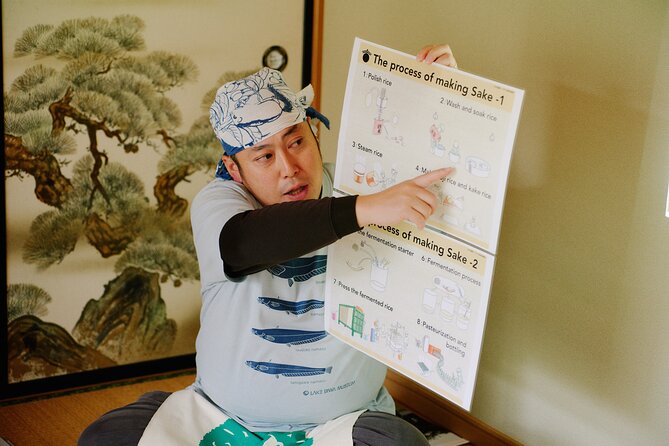
The brewing method is the heart of the visit. Yamane uses traditional wooden barrels made from local Nishikawa timber. Most modern breweries rely on stainless steel, which is easier to clean, control, and reproduce. Wood is more demanding, but it can also bring its own character to the sake.
The barrel and the water allow natural microorganisms to play a role in fermentation. That does not mean every taste can be reduced to one simple cause. The rice, water, fermentation conditions, wood, and timing all matter. The useful point is that Yamane accepts a degree of natural variation rather than trying to make every batch identical.
You will hear about the bag-hanging technique as well, a traditional method associated with allowing sake to drain naturally rather than forcing it through a press. The exact demonstration may depend on the production stage, but the explanation gives you a better sense of the labor behind a small batch.
This is where the tour earns its price. You are not simply sampling sake at a bar. You are learning why the equipment matters, why local timber is chosen, and why small-scale production can produce flavors that a large, standardized operation may not seek.
More Brewery Tours in Japan
- Kyoto: Insider Sake Brewery Tour with Sake and Food Pairing
★ 5.0 · 704 reviews - Takayama: Authentic Sake Tasting at a Historic Brewery
★ 5.0 · 65 reviews - Private Sake Brewery Visit and Tasting Tour in Hida
★ 5.0 · 65 reviews - Kyoto: Sake Brewery and Tasting Tour in Fushimi
★ 4.8 · 55 reviews
Three doburoku pours with Hanno-made cups
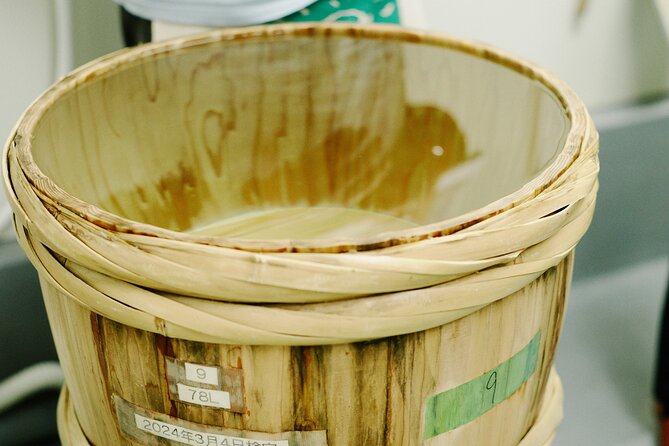
The tasting includes three types of Japanese sake, along with small snacks. The cups are part of the lesson rather than disposable tasting ware. They are made from 100% Hanno soil, a material no longer produced and available only in limited quantities.
That detail gives the tasting a strong local chain: timber from the area for the barrels, local water and natural organisms in the fermentation, local soil for the cups, and snacks to accompany the sake. You can taste the place in a direct, practical way instead of hearing only a general story about regional identity.
The sake itself may surprise you if you know only clear, polished sake. Doburoku can be cloudy and textured because the mash remains in the drink. Fermentation continues after bottling, which is why it is difficult to store and why the product is uncommon in restaurants.
The three pours should give you a useful comparison, though the exact selection may change. Take your time with each one. Notice the sweetness, acidity, texture, aroma, and the way the rice solids affect the mouthfeel. The guide can also explain proper serving methods, a subject Fukunari has covered during past tastings.
Alcohol is included, so plan the rest of your day sensibly. This is a guided tasting, not an open-ended drinking session, but three special pours can still affect you. Eat before or after as needed, and do not plan to drive.
A 2-hour-20-minute brewery visit
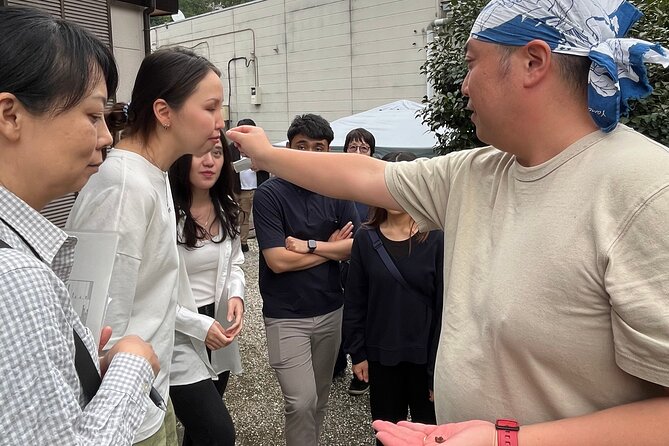
The brewery portion lasts about 2 hours and 20 minutes, making it the main event rather than a quick stop between other sights. You have time for the house visit, brewing explanation, equipment, tasting, and questions.
That length is useful if you want to understand sake rather than simply collect a sample. The owner and guide can connect technical details with personal choices, including the decision to keep production small and use local materials. You may also hear about the brewery’s related inn and barbecue area, which are part of the broader local hospitality operation.
The trade-off is that a long talk about brewing may not suit someone who wants constant movement. Much of the value comes from listening, looking closely, and asking questions. If you have little interest in sake production, the visit could feel slow. If you care about food, craft, rural sustainability, or traditional methods, the time is better spent.
English support appears to be available through the guide and information boards. Still, the experience is built around explanation, so it is sensible to confirm your language needs when booking if you require detailed interpretation.
Returning to Hannō for lunch
After the brewery visit, you ride the bus back with the guide. The return section lasts about 30 minutes, and you arrive around lunchtime according to the planned schedule.
Lunch is not included, but this is also a useful chance to stay in Hannō and eat locally. The guide can suggest restaurants near the station. Since the tour ends where it began, you can choose a simple meal, continue exploring the town, or catch a train onward.
Do not treat the brewery as a side trip that automatically includes a full Hanno food tour. The price covers the brewery experience, sake tasting, and snacks, not lunch. If you want to make the most of the area, plan your meal separately.
Hannō can also fit into a wider regional day. The area offers access toward Chichibu, Kawagoe, and Moominvalley Park. Because this tour starts at 1:00 p.m. and lasts about three and a half hours, it is best paired with nearby plans that do not require a tight afternoon timetable.
Is the $100.43 price fair?
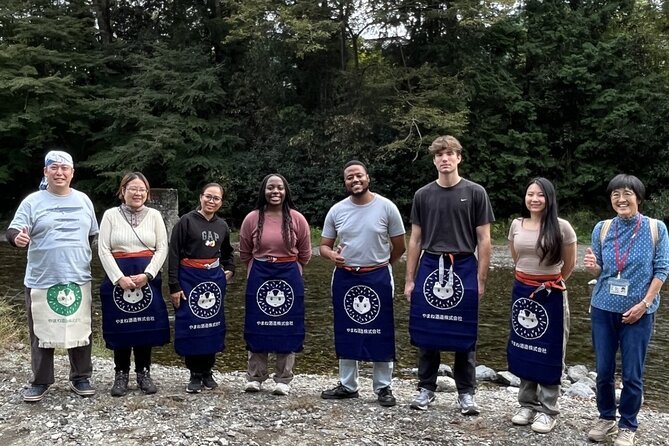
At $100.43 per person, this is not a cheap station-side tasting. The value depends on what you want from the outing.
If you only want to drink three sakes, the price may feel high. You also pay separately for local transportation and lunch. The tasting includes snacks, but it is not a meal.
I think the price makes more sense if you count the full experience: a guide-led meeting at Hannō Station, transportation with the group, a visit to a traditional Japanese house, an extended explanation of unusual brewing methods, three sake samples, local tasting cups, and access to a brewery that produces in small batches. The group cap of eight also matters. A small group gives you more room to ask about the wood, water, fermentation, and the people behind the operation.
Group discounts may be available, which could improve the value if you are booking with friends or family. Confirmation is provided at booking, and free cancellation is available up to 24 hours before the start time. If you cancel later, the payment is not refunded. The experience also requires a minimum number of participants, so a cancellation by the operator may result in another date, another experience, or a full refund.
Who should book this Hanno experience?
I would choose this tour if you enjoy sake, traditional food production, local conservation, or small businesses with a clear point of view. It is especially useful for someone who wants to see how a product connects to its materials and setting.
It also suits repeat visitors to Tokyo. You get out of the city without committing to a long overnight trip, and the roughly one-hour rail journey keeps the logistics manageable. The station meeting point makes the first step straightforward.
This is a good fit for curious drinkers who have already tried ordinary sake and want something less common. Doburoku is not simply another label. Its cloudy texture, continued fermentation, and limited availability make it a different kind of tasting.
I would think twice if you dislike alcohol, want a large commercial brewery with lots of machinery, or need every expense bundled into one price. I would also avoid squeezing this into a packed sightseeing day. The tour has a fixed meeting time, a long brewery visit, and a bus return, so leave breathing room around it.
Final verdict: book it for the method, not just the sake
Book this experience if the idea of tasting sake shaped by local wood, water, soil, and small-batch fermentation interests you. Yamane Brewery offers a rare product in an unusual building, and the tour connects the drink to Hanno’s people and natural resources.
Skip it if you only want a quick tasting or a low-cost activity. For the right audience, the price buys more than alcohol. It gives you a close look at a careful, personal way of making sake, with a small group and a guide who can explain why the process matters.
FAQ
Where does the tour begin?
It begins at Hannō Station in Saitama, Japan. Meet outside the ticket gate and look for the guide holding a tour placard.
What time does the experience start?
The scheduled start time is 1:00 p.m.
How long does the tour last?
The experience lasts approximately 3 hours and 30 minutes.
Where does the tour end?
It ends back at Hannō Station, the meeting point.
How many people can join?
The tour has a maximum of eight participants.
What is included in the price?
The tour includes Japanese sake tastings and a sampling of snacks.
Is lunch included?
No. Lunch is not included, though the guide can recommend local restaurants near Hannō Station.
Are transportation costs included?
No. Transportation costs are not included in the tour price. The group rides a bus to and from the brewery.
How many types of sake will I taste?
The experience includes tastings of three types of special sake.
Can I cancel for a full refund?
Yes. You can cancel at least 24 hours before the local start time for a full refund. Cancellations or changes made less than 24 hours before the start time are not refunded or accepted.
More Sake Brewery Tours in Japan
- Kobe: Guided Sake Breweries Tour with Tastings
★ 5.0 · 55 reviews - Takayama: Authentic Sake Tasting at a Historic Brewery
★ 4.8 · 50 reviews - Sake Brewery and Japanese Life Experience Tour in Kobe
★ 5.0 · 39 reviews - Kyoto: Fushimi Sake Brewery Tour – 18 Tastings in 2.5 Hours
★ 4.7 · 36 reviews
Just added around Japan
- Private Sake Tasting at 300 Years Old Sake Brewery in Tokyo★ 5.0 · 3 reviews
- Takayama: Authentic Sake Tasting at a Historic Brewery★ 5.0 · 65 reviews
- Rural Brewery Town Walk: Half-Day Private Tour Near Kyoto★ 5.0 · 7 reviews
- 1-Day Sapporo Historical Village and Sapporo Beer Museum Tour★ 5.0 · 3 reviews
- Sapporo Tour in the Port City of Otaru and Local beer brewery★ 5.0 · 3 reviews
- Cultural Sake Brewery Private Tour & Unlimited Tasting Near Tokyo★ 5.0 · 4 reviews
- Sake “Omakase” in Osaka : Guided Tasting by a Active Sake brewer★ 5.0 · 11 reviews
- Nara – Craft Beer, Sake & Food Walking Tour★ 4.0 · 7 reviews
Japan Beer Tours, compared.

Insider Sake Brewery Tour with Sake and Food Pairing
Read our review →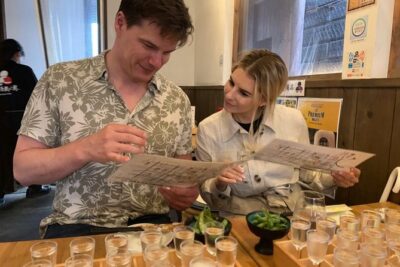
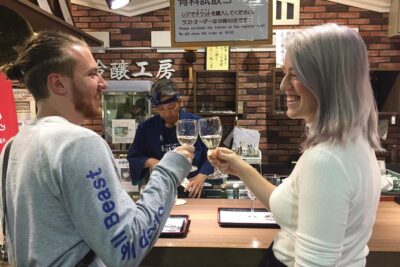
KOBE Sake Tasting Tour at Breweries (tasting fee included)
Read our review →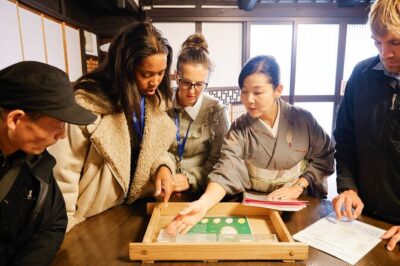
Hiroshima Saijo Sake Tasting Tour with visit to 7 Breweries
Read our review →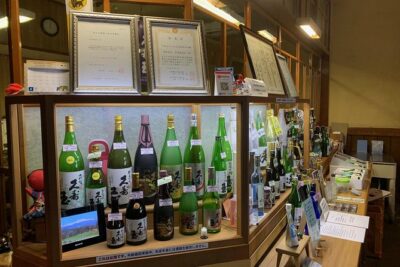
Takayama: Authentic Sake Tasting at a Historic Brewery
Read our review →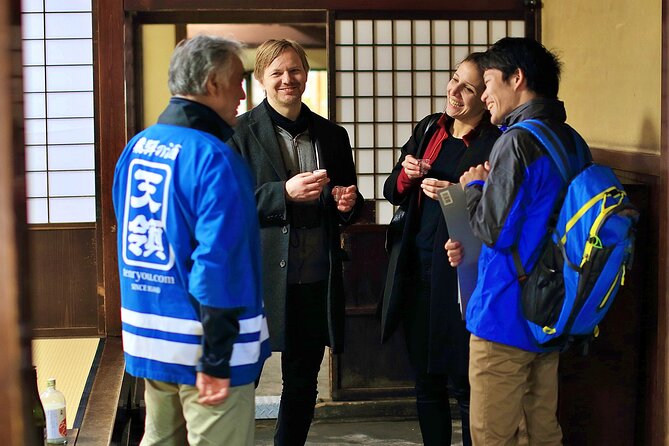
Private Sake Brewery Visit and Tasting Tour in Hida
Read our review →
Browse the lists this tour appears in