
REVIEW · KOBE
Kobe: 3-Hour Sake Breweries Tour with Special Tasting
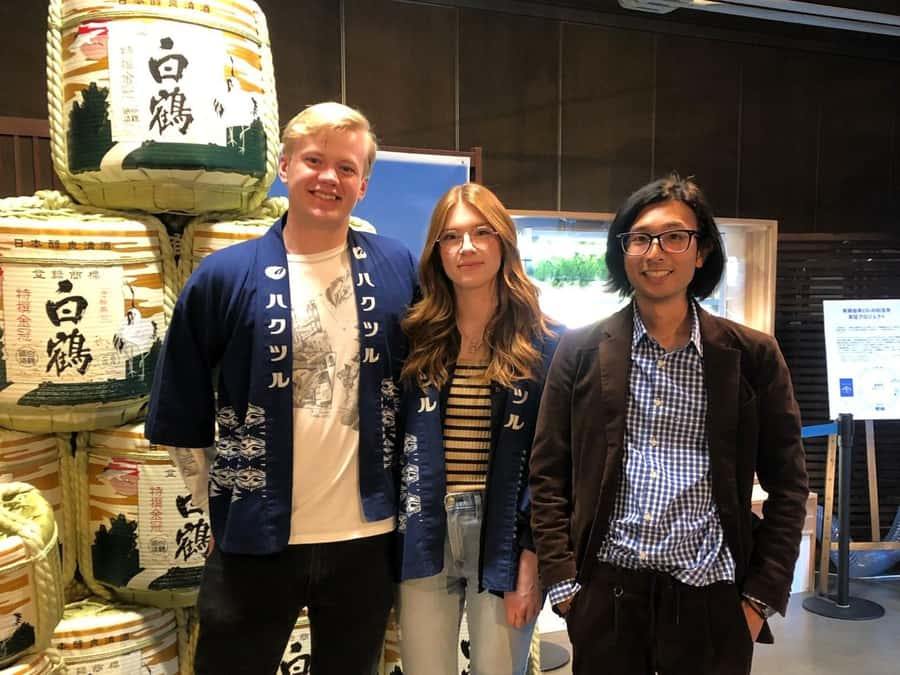
Nada Gogo is one of Japan’s best places to understand sake because the drink is still tied closely to the neighborhood. This three-hour tour takes you between three breweries, where you can see how old methods now work alongside modern production and taste sake made in the district.
I like the mix of history and tasting, and I like that the route can include both a major name such as Hakutsuru and smaller producers whose bottles may not be sold widely. The main caution is simple: you walk between stops, so hot weather can make the outing tiring. At 37°C, one group found the walk demanding, even with an upbeat guide and a welcome ice cream stop.
Key points
- Three breweries in Nada Gogo: The route has included Kikumasamune, Hamafukutsuru, and Hakutsuru, giving you more than one view of sake making.
- Tastings at every stop: Up to 1,000 yen per brewery is covered for tasting fees, with several sake styles to compare.
- Rice quality explained clearly: You learn how polishing rice grains affects the character and quality of the finished sake.
- Guides add local context: Guides such as Chiyuki, Kaito, Max, Atsuko, and Naoko have explained brewing, Japanese customs, and the area’s past.
- A walking tour, not a bus tour: Meet at Hanshin Uozaki Station and return there after about three hours.
- Good value for sake fans: The $94 price includes the guide and specified tasting allowance, not just admission to a single museum.
Why Nada Gogo is the right place for a sake tour
Nada Gogo is a well-known sake-producing area in Kobe. Its name refers to a group of sake districts, and the tour focuses on the part of the region reached from Hanshin Uozaki Station.
The appeal is that sake here is not presented as an isolated museum subject. You see the industry through working brewery spaces, tasting rooms, displays, and explanations of how the drink is made. The exact balance of active production and exhibition can vary by brewery, but the experience gives you a useful sense of how sake moved from old craft practice to modern commercial production.
I find this setting more useful than a one-room tasting alone. You can taste a sake and then connect it to rice polishing, fermentation, storage, and the brewery’s own methods. That helps you understand why two clear-looking drinks can taste so different.
The region also gives the tour a strong local identity. You are not simply sampling imported brands in a hotel bar. You are visiting a part of Kobe where sake production has shaped the area’s reputation and daily business.
More Beer Tastings in Japan
- Kyoto Sake Brewery & Tasting Walking Tour
★ 5.0 · 623 reviews - KOBE Sake Tasting Tour at Breweries (tasting fee included)
★ 5.0 · 154 reviews - Hiroshima Saijo Sake Tasting Tour with visit to 7 Breweries
★ 5.0 · 104 reviews
Meeting your guide at Hanshin Uozaki Station
The tour begins in front of the ticket gate at Hanshin Uozaki Station. Look for the guide holding the yellow DeepExperience sign.
This meeting point matters because it removes one common problem with brewery visits: finding an unfamiliar entrance in an industrial district. You can arrive at the station, pass through the ticket gate, and look for a clear sign rather than wandering around trying to identify the starting point.
The tour ends back at the same meeting point. That makes planning easier, especially if you have a train to catch or another Kobe activity booked afterward.
Guides work in English and Japanese. Several guides have received especially warm praise for their manner and teaching style. Chiyuki has been described as friendly, lively, and passionate about sake. Kaito used note cards to teach Japanese sayings and local history. Max focused on the story of sake, while Atsuko kept the group moving in difficult summer heat. Naoko was praised for being kind and able to explain things again when needed.
The individual guide can shape the feel of the outing, so do not expect a single fixed personality or script. What you can reasonably expect is a guide-led route with explanation, translation, and help comparing the tastings.
The first brewery: starting with sake basics
The first stop begins to answer the questions you may already have. What makes sake different from other alcoholic drinks? Why does rice polishing matter? How do traditional methods fit into present-day production?
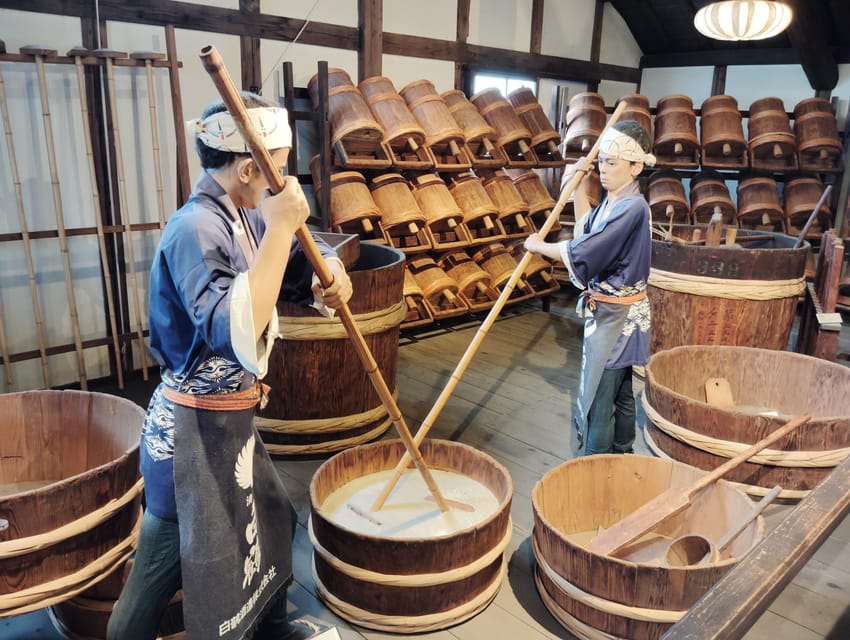
The tour explains the main steps, beginning with the careful selection of rice. You learn how the rice grain is prepared and polished, then how fermentation creates the drink’s flavor and aroma. The emphasis is not only on ingredients. It is also on the patience and precision needed to control each stage.
One particularly useful lesson concerns rice polishing. More polishing removes more of the outer part of the grain, changing what remains for brewing. The guide connects that process to sake quality and style, so you can make more sense of labels and tasting differences later.
This is a good place to take notes if you are new to sake. You do not need to arrive knowing terms or brewing grades. The guide can give you a framework before the tasting becomes more varied.
At this stop, pay attention to the contrast between handwork from earlier eras and current production. The tour covers both, which helps avoid the usual false choice between old-fashioned craft and modern machinery. Nada Gogo’s sake story includes both sides.
Comparing traditional and modern brewing
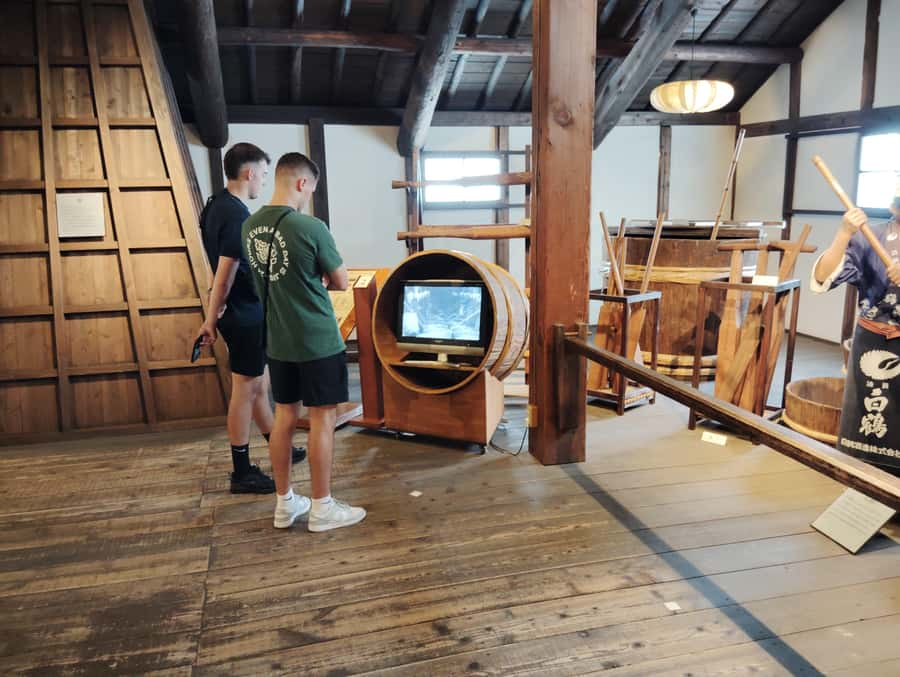
The strongest part of the experience is the comparison between breweries. One producer may present older equipment and methods, while another may show how technology now supports scale and consistency.
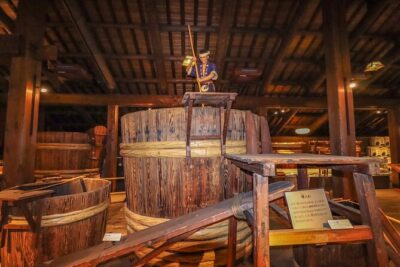
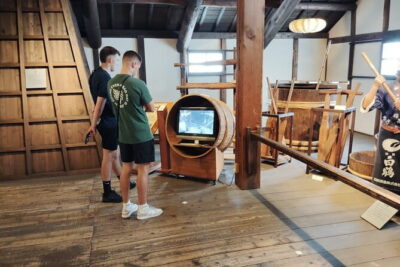
A stop associated with traditional brewing can help you picture how sake was made hundreds of years ago. You may see tools, displays, or explanations of older work practices. The information supplied for this tour does not promise that every stage will be active on the day, so think of the visit as a guided look at brewing heritage rather than a guaranteed factory-floor demonstration.
The modern side gives you a different lesson. Larger production allows a brewery to supply more people while maintaining careful control of the process. That does not make the sake less connected to tradition. It shows how an old Japanese drink continues to fit present-day life.
This comparison is more useful than visiting three nearly identical tasting rooms. The breweries have distinct approaches, and the guides explain how each one fits into the wider sake trade. You begin to notice that sake is not one single flavor or production style.
More Brewery Tours in Japan
- Kyoto: Insider Sake Brewery Tour with Sake and Food Pairing
★ 5.0 · 704 reviews - Takayama: Authentic Sake Tasting at a Historic Brewery
★ 5.0 · 65 reviews - Private Sake Brewery Visit and Tasting Tour in Hida
★ 5.0 · 65 reviews - Kyoto: Sake Brewery and Tasting Tour in Fushimi
★ 4.8 · 55 reviews
Three brewery stops, including Hakutsuru and local producers
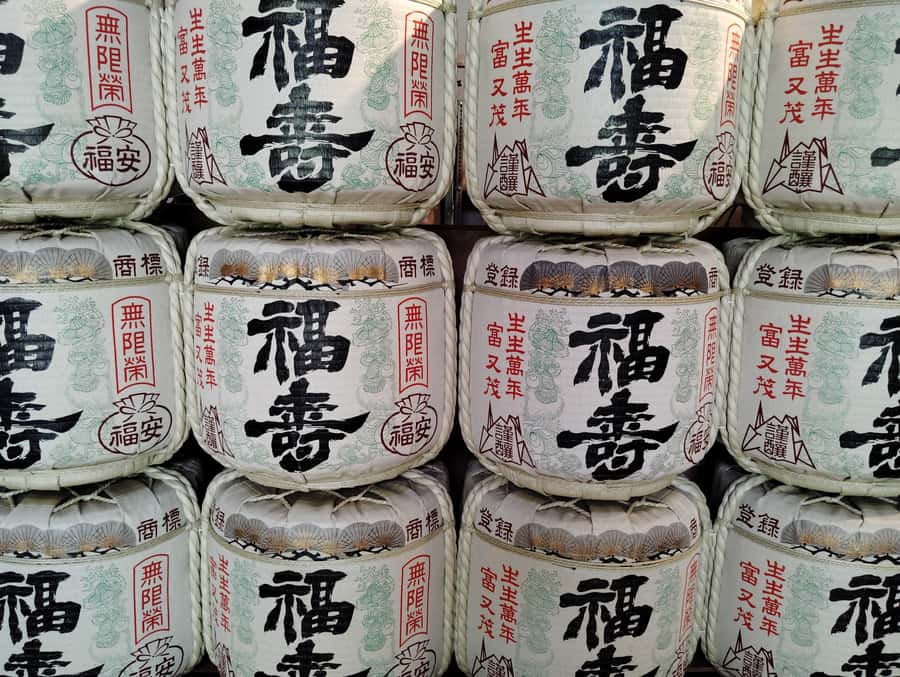
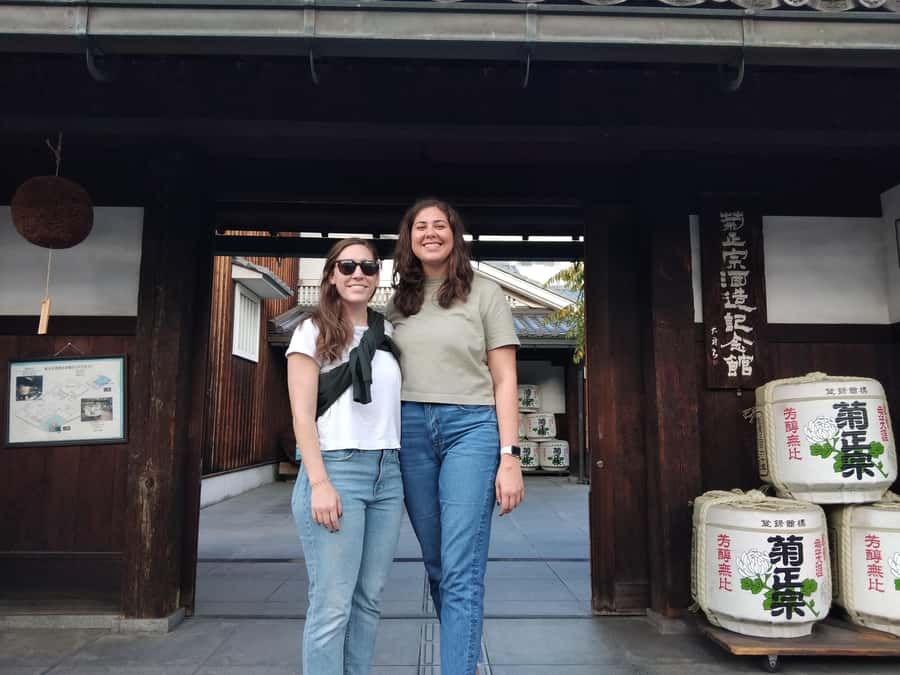
One reported route included Kikumasamune, Hamafukutsuru, and Hakutsuru. These names give you a sense of the range: a major producer with a familiar public profile, alongside breweries where the bottles may be harder to find in ordinary shops.
Hakutsuru is a particularly useful stop for understanding the scale and reach of Japanese sake. A large, established producer can show you how a famous brand presents its history and products. It may feel more polished and organized than a small local brewery, but that is part of the comparison.
Hamafukutsuru adds a different point of reference. The tour gives you a chance to compare its sake with the larger brands and consider how local production can have its own identity.
Kikumasamune rounds out the set. With three names in one afternoon, you are not asked to judge a brewery from a single sample. You can compare aroma, sweetness, dryness, texture, and finish across producers.
The exact route should be confirmed when booking if a particular brewery matters to you. The activity description promises three breweries, but the individual account naming these three does not guarantee that every departure follows the identical order or selection.
What the tastings are like
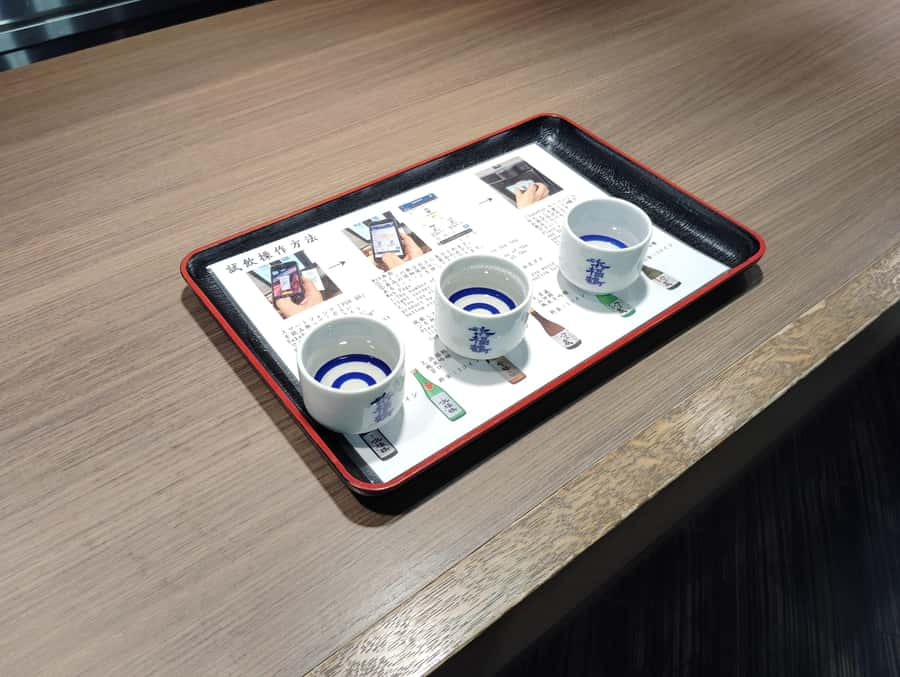
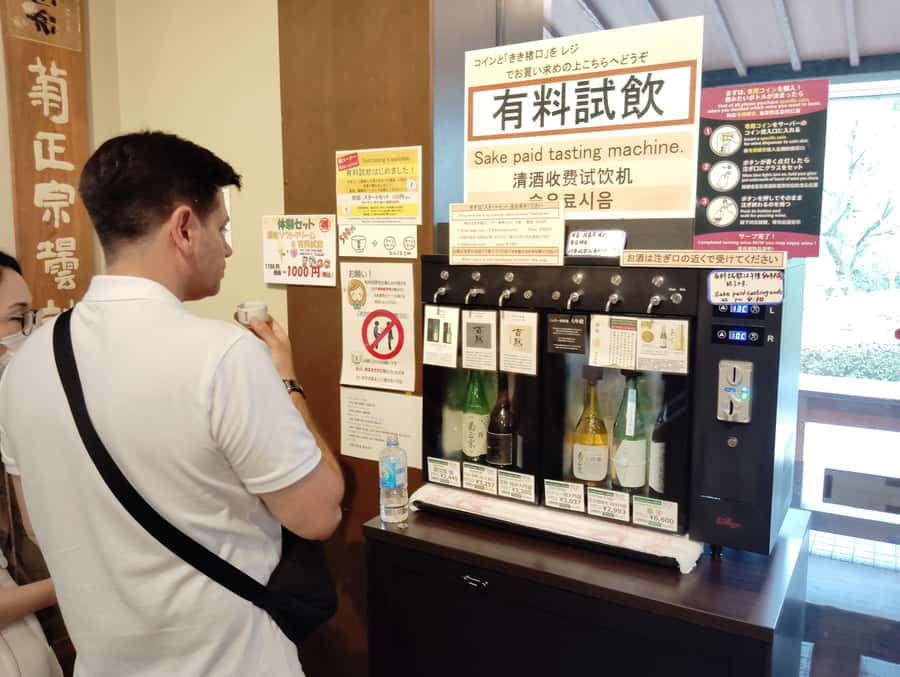
Tasting is built into each brewery visit. You receive a range of sake rather than one ceremonial sip, and the guide helps place the differences in context.
This is where the earlier explanation of rice and fermentation starts to pay off. You can ask why one sake tastes lighter, fuller, sweeter, drier, or more fragrant. You also get a chance to decide what you actually like, instead of choosing a bottle because the label looks attractive.
The included allowance is up to 1,000 yen per brewery for tasting fees. Across three stops, that can cover up to 3,000 yen in tasting charges, depending on what each brewery offers. The wording matters: it is an allowance, not a promise that every possible pour or purchase is included.
You should also budget for any bottles or extra drinks you want to buy. The tasting allowance covers specified fees, while souvenirs and additional purchases are separate.
The tastings are best approached as a comparison exercise. You do not need to drink quickly or pretend to detect every flavor. Ask questions, use the guide’s explanations, and notice which styles appeal to you. If you already enjoy sake, the variety makes the tour more worthwhile than a basic introduction.
The walking and summer heat factor
The tour lasts three hours and involves walking between breweries. That gives the experience a neighborhood feel, but it also creates a real physical consideration.
In hot weather, you should bring water, wear comfortable shoes, and avoid treating the schedule as effortless. One group completed the route in 37°C heat and found the walk quite demanding. Their guide, Atsuko, kept the mood light and even bought ice cream to help everyone cool down.
That kind of flexibility is useful, but it does not remove the heat. If you are visiting Kobe in midsummer, check the forecast and dress for an outdoor walking route. The tasting rooms may offer relief, but you should not assume that every stretch between breweries is air-conditioned.
The walking also means this is not the best choice for someone who wants to sit in one place for three hours. It suits you if you like moving through a district and using the walk to connect separate pieces of local history.
The guides make the difference
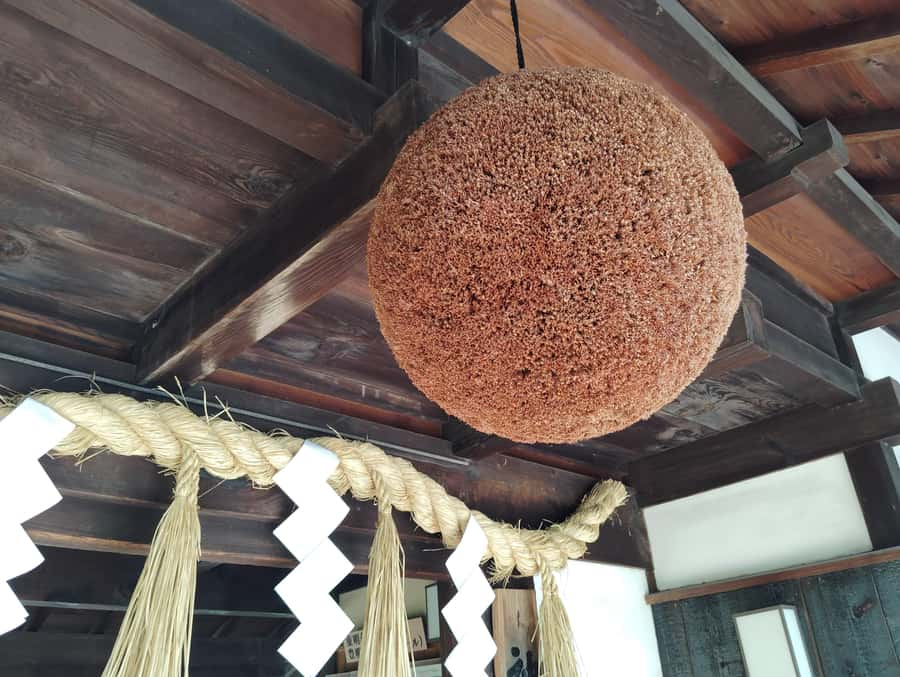
A sake tour can become a list of production terms if the guide simply recites facts. Here, the personal side of the guiding is a major part of the value.
Kaito used small note cards and added Japanese sayings to the brewing story. That kind of detail can make the tour feel connected to language and daily culture, not just alcohol production. Max concentrated on the history of sake and answered questions in a friendly way.
Chiyuki has guided several highly praised outings and is described as fun, clear, and passionate. She has also explained the brewing process from older methods through current production. In one case, she worked in both Japanese and English, rephrasing points when a guest needed help.
You may meet a different guide, so treat these names as examples of the style you might receive rather than a guaranteed assignment. The important point is that the tour is designed around a person explaining the place, not an audio guide or a self-guided route.
A small act of kindness can also shape the day. Kaito gave medicine to a couple whose daughter was ill, and other guides adjusted their pace to suit the group. Those details do not change the brewery content, but they show why a private or small guided experience can feel more responsive than a standard admission ticket.
Is $94 a fair price?
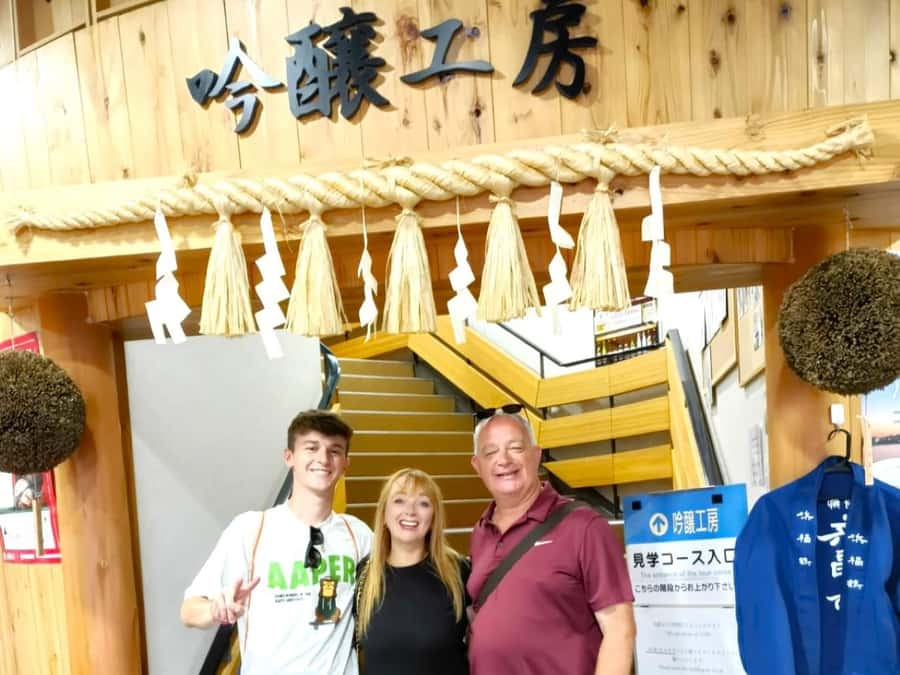
At $94 per person, this is not the cheapest way to taste sake in Kobe. You could buy drinks at a shop or bar for less. That comparison misses the point, though.
The price includes a three-hour guide-led visit to three breweries, explanations in English or Japanese, and up to 1,000 yen per brewery for tasting fees. You are paying for access, interpretation, route planning, and comparison, not just liquid in a glass.
I think the price makes sense if you want to understand sake rather than simply sample it. A self-guided visit might save money, but you could miss the meaning behind rice polishing, the contrast between older and newer methods, and the connection between each producer and Nada Gogo.
The value is weaker if you already know the breweries well, speak Japanese comfortably, and are happy to arrange your own tastings. It is also less attractive if you want a relaxed seated tasting with no walking.
For a first serious look at sake in Kobe, the three-stop format gives the fee a reasonable purpose. The included tasting allowance helps, though you should still allow extra money for bottles or pours beyond the covered amount.
Who should book this Nada Gogo tour?
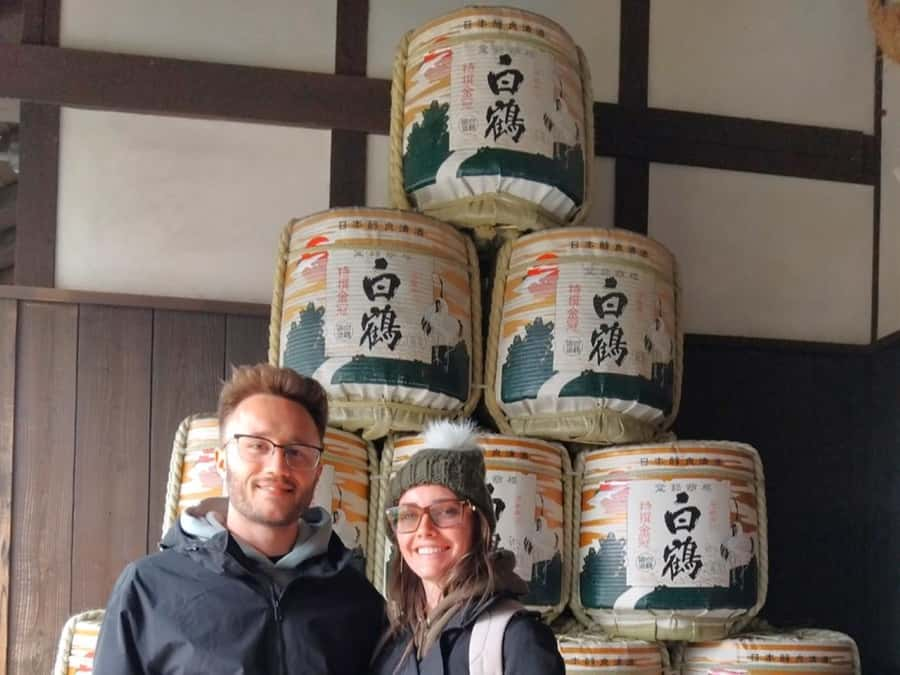
This experience suits you best if you:
- Like Japanese food, drink, and local history.
- Want a clear introduction to sake production.
- Prefer meeting a guide rather than managing several brewery visits alone.
- Enjoy comparing large producers with less widely distributed local bottles.
- Are comfortable walking between stops for three hours.
- Want English or Japanese guiding.
- Are traveling with an adult child or a small group that enjoys cultural activities.
It is less suitable if you dislike alcohol tastings, need a fully seated activity, or are visiting during extreme heat and do not want outdoor walking. Families should also consider the tasting focus. One group attended with a 22-year-old son, but the activity is plainly built around sake.
Practical details before you reserve
The tour costs $94 per person and lasts three hours. Meet your guide in front of the Hanshin Uozaki Station ticket gate, where the yellow DeepExperience sign should be easy to spot.
The activity finishes at the same meeting point. English and Japanese are available, and the booking terms allow you to reserve now and pay later. You can cancel up to 24 hours in advance for a full refund.
Wear shoes suitable for walking and check the weather, especially in summer. Bring space in your bag if you may buy a bottle, and remember that the tasting allowance does not necessarily cover extra purchases.
Should you book it?
Book this tour if you want sake explained in its home district, with three brewery visits and enough tasting to compare styles. The best part is the combination of production details, local history, and personable guides such as Chiyuki, Kaito, Max, and Atsuko.
Skip it if your priority is the lowest possible drink price or a quiet indoor tasting. For everyone else, the route offers a useful introduction to Nada Gogo, and the three-brewery comparison gives you a much clearer idea of how Japanese sake can differ from one producer to the next.
FAQ
Where does the Kobe sake brewery tour meet?
Meet your guide in front of the Hanshin Uozaki Station ticket gate. The guide will hold a yellow sign with the DeepExperience logo.
How long does the sake brewery tour last?
The tour lasts three hours.
How many breweries do you visit?
You visit three breweries in the Nada Gogo sake district.
Which breweries may be included?
A reported route included Kikumasamune, Hamafukutsuru, and Hakutsuru. The activity information promises three breweries, but it does not guarantee that every departure uses the same three stops.
Are tasting fees included?
Yes. Up to 1,000 yen per brewery is included for tasting fees.
What languages are available?
The tour is available in English and Japanese.
Where does the tour finish?
The activity ends back at the Hanshin Uozaki Station meeting point.
Can I cancel for a full refund?
Yes. You can cancel up to 24 hours in advance for a full refund. You can also reserve and pay later, so no payment is required at the time of booking.
More Three-Hour Beer Tours in Japan
- Kobe: 3-Hour Private Sake Tour in Japan’s Top Sake Area
★ 5.0 · 9 reviews - Bremen: 3-Hour Beck’s Brewery Tour
★ 4.6 · 1,091 reviews - Munich’s Beer Halls and Breweries: 3-Hour Guided Tour
★ 4.6 · 928 reviews - Prague: 3-Hour Beer Tour and Traditional Czech Dinner
★ 4.5 · 599 reviews
More Sake Brewery Tours in Japan
- Kobe: Guided Sake Breweries Tour with Tastings
★ 5.0 · 55 reviews - Takayama: Authentic Sake Tasting at a Historic Brewery
★ 4.8 · 50 reviews - Sake Brewery and Japanese Life Experience Tour in Kobe
★ 5.0 · 39 reviews - Kyoto: Fushimi Sake Brewery Tour – 18 Tastings in 2.5 Hours
★ 4.7 · 36 reviews
Just added around Japan
- Private Sake Tasting at 300 Years Old Sake Brewery in Tokyo★ 5.0 · 3 reviews
- Takayama: Authentic Sake Tasting at a Historic Brewery★ 5.0 · 65 reviews
- Rural Brewery Town Walk: Half-Day Private Tour Near Kyoto★ 5.0 · 7 reviews
- 1-Day Sapporo Historical Village and Sapporo Beer Museum Tour★ 5.0 · 3 reviews
- Sapporo Tour in the Port City of Otaru and Local beer brewery★ 5.0 · 3 reviews
- Cultural Sake Brewery Private Tour & Unlimited Tasting Near Tokyo★ 5.0 · 4 reviews
- Unique Brewery Tour and One-of-a-Kind Sake Tasting Near Tokyo★ 5.0 · 17 reviews
- Sake “Omakase” in Osaka : Guided Tasting by a Active Sake brewer★ 5.0 · 11 reviews
Kobe Beer Tours, compared.
KOBE Sake Tasting Tour at Breweries (tasting fee included)
Read our review →
Sake Brewery and Japanese Life Experience Tour in Kobe
Read our review →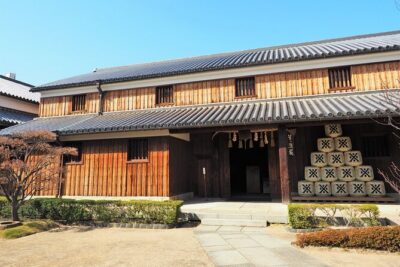
Exploring Nada Sake Breweries Kobe Private Tour with Government-Licensed Guide
Read our review →
Sake Brewery Tour with Tasting and Kobe Beef Bites
Read our review →
3-Hour Private Sake Tour in Japan’s Top Sake Area
Read our review →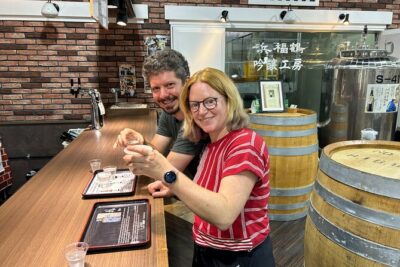
KOBE Sake brewery PRIVATE walking tour with Local guide
Read our review →Browse the lists this tour appears in