
REVIEW · KOBE
Kobe: 5 Sake Breweries Tour in a Day
Kobe’s Nada Gogo district packs five sake breweries into one walkable day, giving you a useful look at both large producers and smaller local operations. You taste along the way, learn how rice and fermentation shape the drink, and finish with Nara-zuke, a pickle made from sake lees.
I like the range of stops, from the Hamafukutsuru Brewery to the Hakutsuru Sake Brewery Museum and smaller producers such as Konan Muko no Sato. I also like the built-in sushi lunch, which gives your palate and your feet a break. The possible drawback is the pace: 330 minutes includes several walks, tastings, and guided visits, so this is a full half-day rather than a slow, leisurely sampling session.
Key points to know before booking
- Five brewery styles: Compare major sake makers with smaller, community-focused producers in Nada Gogo.
- A real walking route: The tour begins at Hanshin Uozaki Station and finishes at Shinzaike Station, with walks of 5 to 15 minutes between stops.
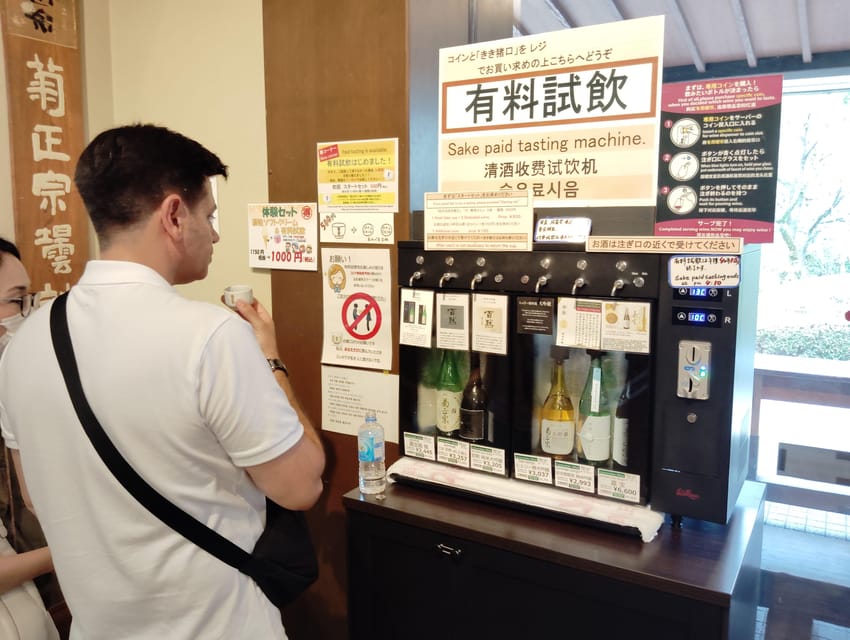
- Tastings throughout: Each brewery visit includes sake tasting, with a food tasting at the final Nara-zuke stop.
- Sushi lunch break: A one-hour meal interrupts the tastings and helps make the long route more comfortable.
- English or Japanese guiding: Private groups can book with a live guide in either language.
- Flexible booking: You can cancel up to 24 hours before the tour for a full refund and reserve without paying immediately.
Why Nada Gogo is the right place to study sake
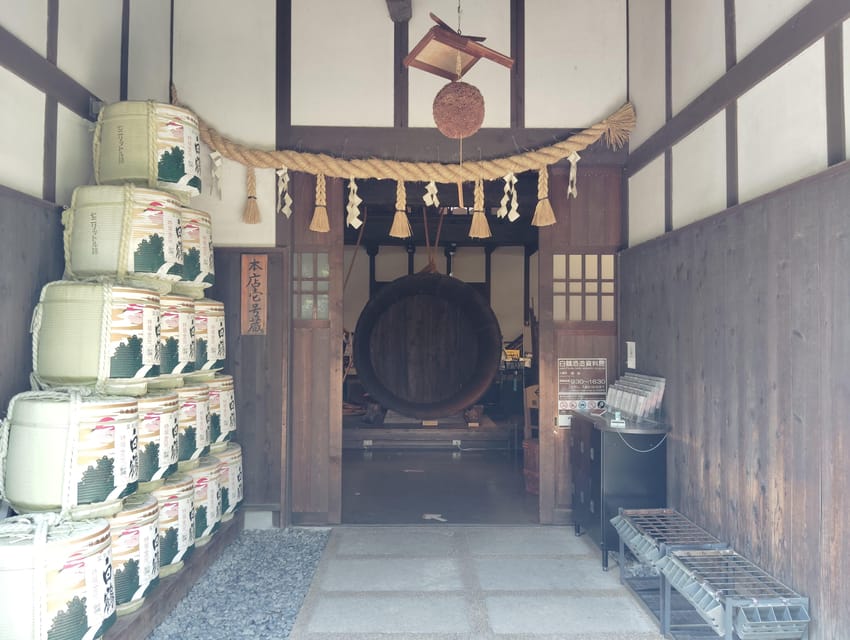
If you want to understand sake instead of simply ordering a glass with dinner, Nada Gogo is a smart place to spend time. It is one of Japan’s leading sake-producing areas, and the tour keeps you in this concentrated district for the entire afternoon.
That concentration matters. You do not spend much of the day crossing Kobe from one attraction to another. Instead, you move on foot between producers, seeing how nearby breweries can still take different approaches to the same basic drink.
The route also helps you compare scale. Some stops represent larger, established makers with museums or formal visitor spaces. Others feel more local and focused on the craft itself. That contrast is more useful than visiting one polished tasting room and assuming it represents all Japanese sake.
You will hear about rice selection, fermentation, traditional methods, and newer brewing practices. The point is not just to taste several bottles. It is to connect the flavor in your glass with the work that produced it.
More Brewery Tours in Japan
- Kyoto: Insider Sake Brewery Tour with Sake and Food Pairing
★ 5.0 · 704 reviews - Kyoto Sake Brewery & Tasting Walking Tour
★ 5.0 · 623 reviews - KOBE Sake Tasting Tour at Breweries (tasting fee included)
★ 5.0 · 154 reviews
Starting at Uozaki Station
Meet your guide in front of the ticket gate at Hanshin Uozaki Station. Look for the yellow sign with the DeepExperience logo. The clear meeting instructions are helpful, especially if you are not familiar with Kobe’s rail network or Japanese station layouts.
The route begins with a 10-minute walk to Hamafukutsuru Brewery. This opening walk gives you time to meet your guide and settle into the format before the tastings begin.
Because this is a private group, the experience should feel more personal than a large scheduled group outing. You can ask questions as the day develops, and the guide can explain unfamiliar terms at the moment they matter. The available languages are English and Japanese.
Hamafukutsuru Brewery: a strong first tasting
The first formal stop is Hamafukutsuru Brewery, with about 40 minutes for a guided visit and tasting. Starting here makes sense because you get an early introduction to Nada Gogo’s production culture before comparing it with the other makers.
Expect the guide to explain how sake moves from carefully selected rice through fermentation and into the finished drink. The tasting gives you a first reference point. Later, you can judge other samples against what you tried here instead of treating every sake as an unrelated flavor.
Forty minutes is long enough for an introduction, but not long enough for every technical detail. If you have a specific interest in brewing, ask early. Your guide can help focus the conversation on rice, fermentation, flavor, or the difference between large and small producers.
After Hamafukutsuru, you walk about 10 minutes to Kiku-Masamune Shuzo Kinenkan.
Kiku-Masamune Shuzo Kinenkan: tradition in a compact stop
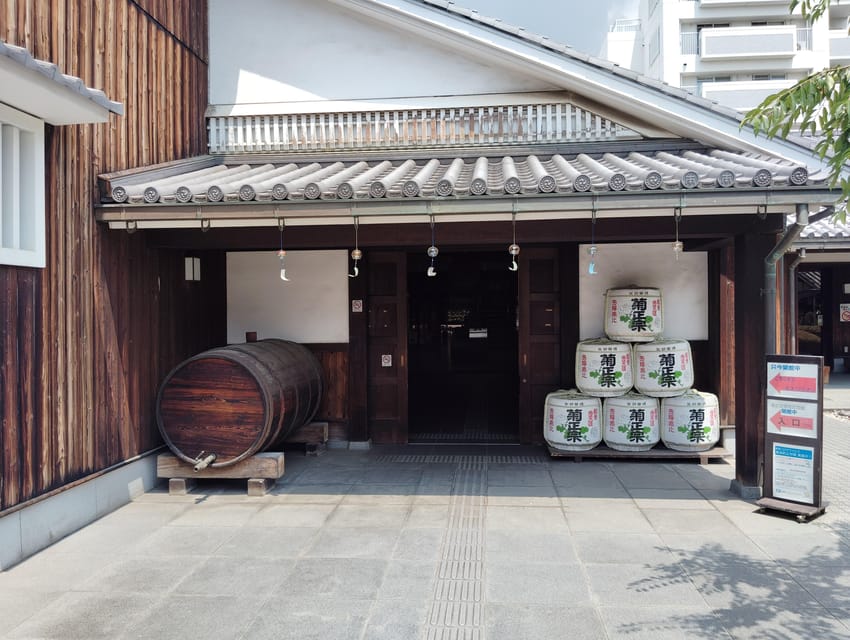
The Kiku-Masamune Shuzo Kinenkan provides another guided visit and tasting, scheduled for about 30 minutes. This is one of the shorter brewery stops, so you should expect a focused look rather than a long museum visit.
The value here comes from comparison. After only one brewery, it is easy to think you understand the local style. A second producer quickly shows you that Nada Gogo sake is not one fixed taste or one production model.
You will continue learning about the regional methods that built Nada Gogo’s reputation. The visit helps place the drink in a cultural setting, not just a commercial one. If you are new to sake, listen for the practical differences your guide points out, then use the tasting to test them.
The next stop is lunch at a local restaurant, reached after another 10-minute walk.
More Sake Brewery Tours in Japan:
- Hiroshima Saijo Sake Tasting Tour with visit to 7 Breweries
★ 5.0 · 104 reviews - Takayama: Authentic Sake Tasting at a Historic Brewery
★ 5.0 · 65 reviews - Private Sake Brewery Visit and Tasting Tour in Hida
★ 5.0 · 65 reviews - Kyoto: Sake Brewery and Tasting Tour in Fushimi
★ 4.8 · 55 reviews
The sushi lunch break
Lunch lasts about one hour at a local restaurant, with sushi noted as the meal. This is a welcome pause in a tasting-heavy day. Your mouth gets a reset, and you have time to talk with the guide about what you have tried so far.
I like this part of the design. A five-brewery route could become a blur of small cups and technical explanations. A proper meal breaks that rhythm and gives you a chance to enjoy Kobe as a food city, not only as a sake center.
The tour information includes the guide fee and tasting fee, but it does not list lunch among the included items. Plan to pay for the meal separately. That is an important budget detail when you compare the $123 price with other food and drink activities.
The lunch stop also affects timing. This is not a quick snack between breweries. With an hour at the restaurant, the day has a more manageable rhythm, but it still remains a busy half-day.
Hakutsuru Sake Brewery Museum: the longest brewery visit
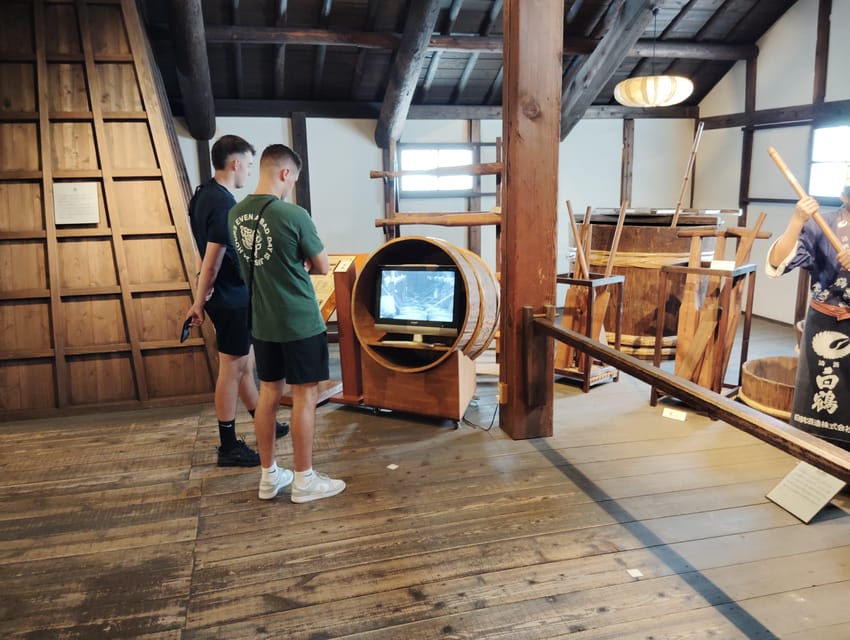
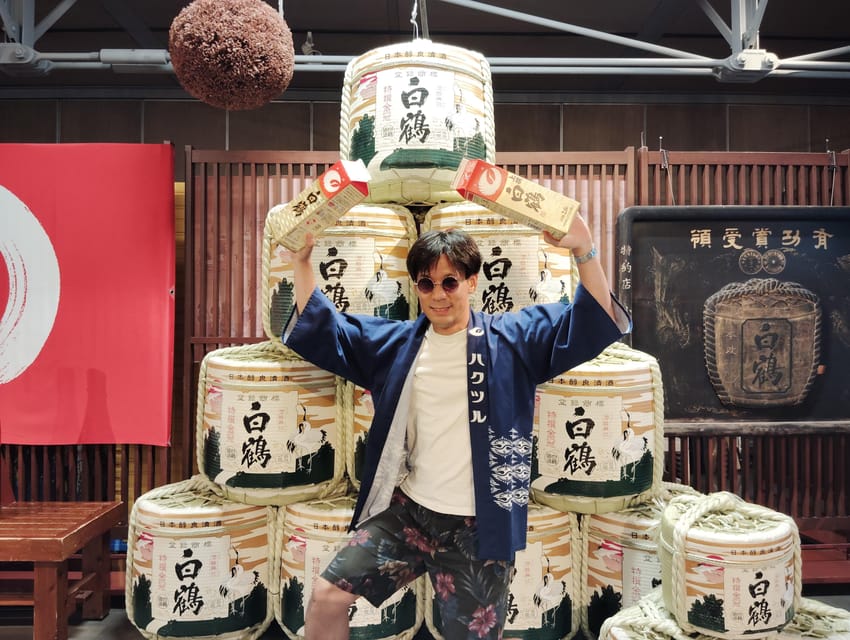
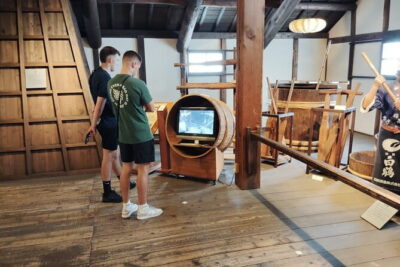
After lunch and a 10-minute walk, you reach the Hakutsuru Sake Brewery Museum. At about one hour, this is the longest brewery stop on the route.
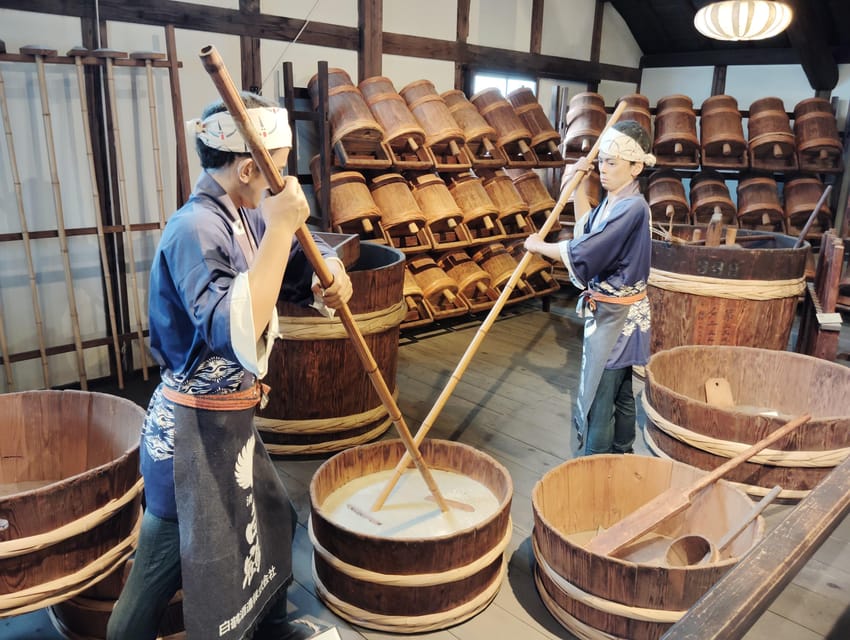
That extra time makes it the best place to put the brewing process together. You can spend longer with the story of sake production, from rice preparation to fermentation and the finished product. The museum setting should also help you connect tools, methods, and regional practice in a way that a short tasting room visit cannot.
Hakutsuru represents the larger end of the production range. That makes it a useful counterpoint to the smaller producers later in the day. You are not being asked to choose which approach is best. Instead, you see how scale and tradition can coexist within the same district.
This is also the point where the number of tastings may begin to matter. You should pace yourself and pay attention to the guide’s explanations rather than treating every sample as a race. The tour is built around learning through comparison, not simply collecting drinks.
Kobe Shushinkan: a short, focused tasting
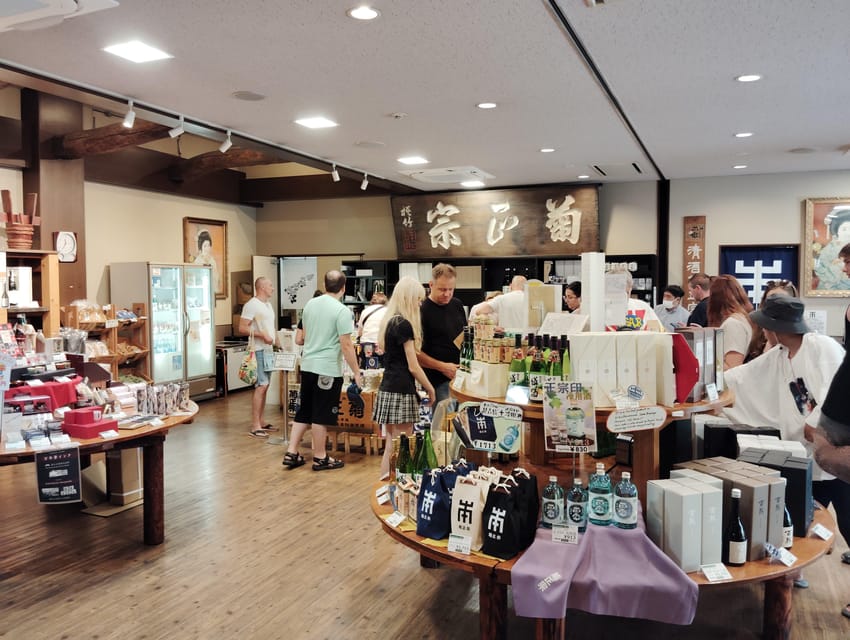
A 15-minute walk leads to Kobe Shushinkan, where the visit and tasting last about 10 minutes. This is a quick stop, so think of it as a compact addition to the broader comparison.
The short timing can be a benefit. You get another producer’s perspective without adding a long lecture late in the day. It also keeps the route moving after the more substantial museum visit.
At the same time, ten minutes leaves little room for a long discussion. If you have questions, save them for the walking sections or ask your guide to explain the most useful point first. This is one of the places where the private format helps, since you can keep the conversation relevant to your interests.
You then walk about five minutes to Konan Muko no Sato.
Konan Muko no Sato: the smaller-producer contrast
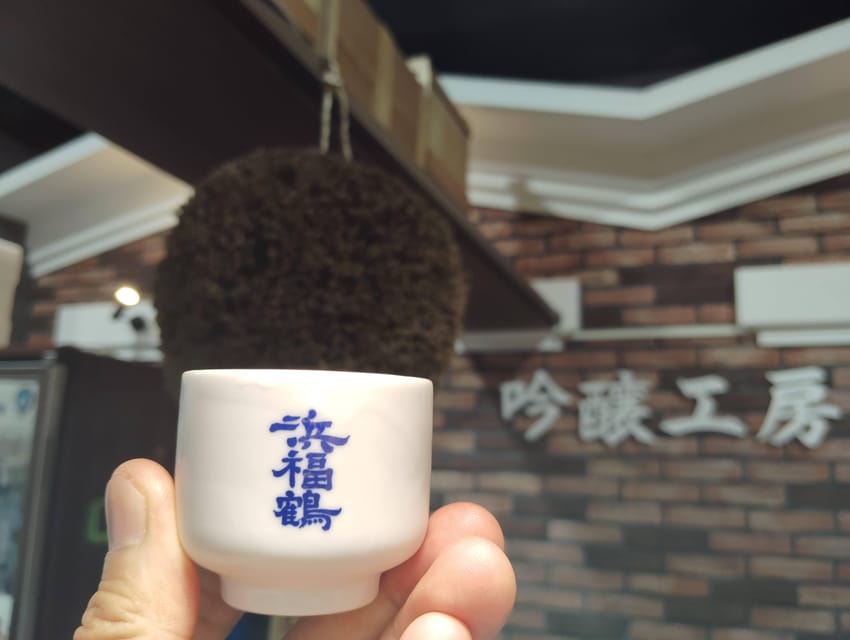
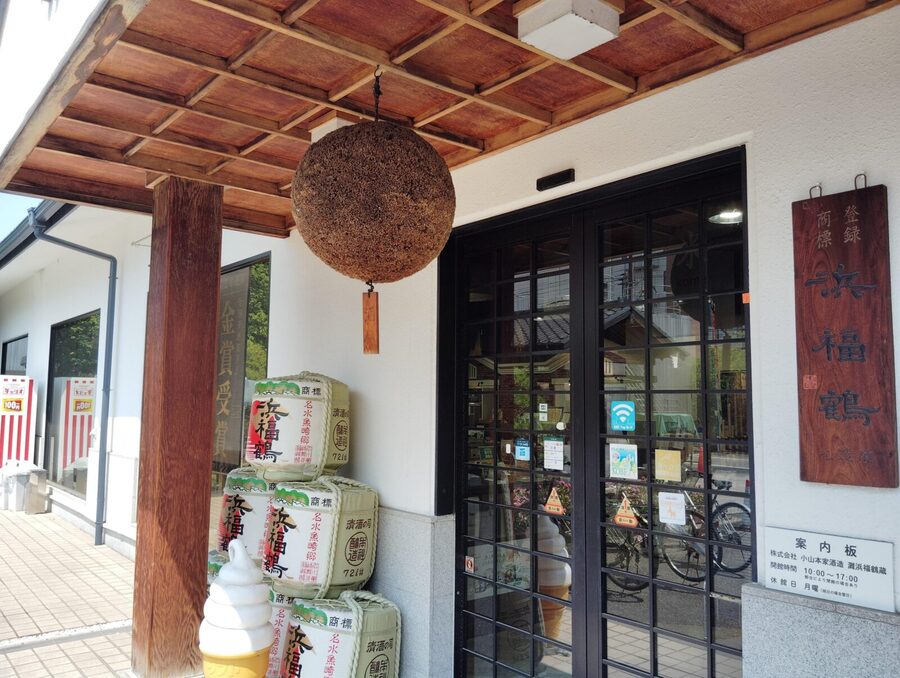
Konan Muko no Sato offers another guided tasting, scheduled for roughly 15 minutes. Along with Hamafukutsuru, Kiku-Masamune, Hakutsuru, and Kobe Shushinkan, it completes the tour’s five-brewery lineup.
This stop is valuable because the route is not limited to famous, large-scale names. Smaller or more community-focused producers can show you a different relationship between sake and place. You may find the atmosphere and presentation less formal, though the supplied details do not promise a particular interior or brewing demonstration.
By this stage, you should have enough samples and explanations to notice your own preferences. You might prefer lighter sake, fuller styles, or something that works well with food. The guide can help you put those preferences into words, which is often more useful than memorizing producer names.
Izumisyuzou and Nara-zuke made from sake lees
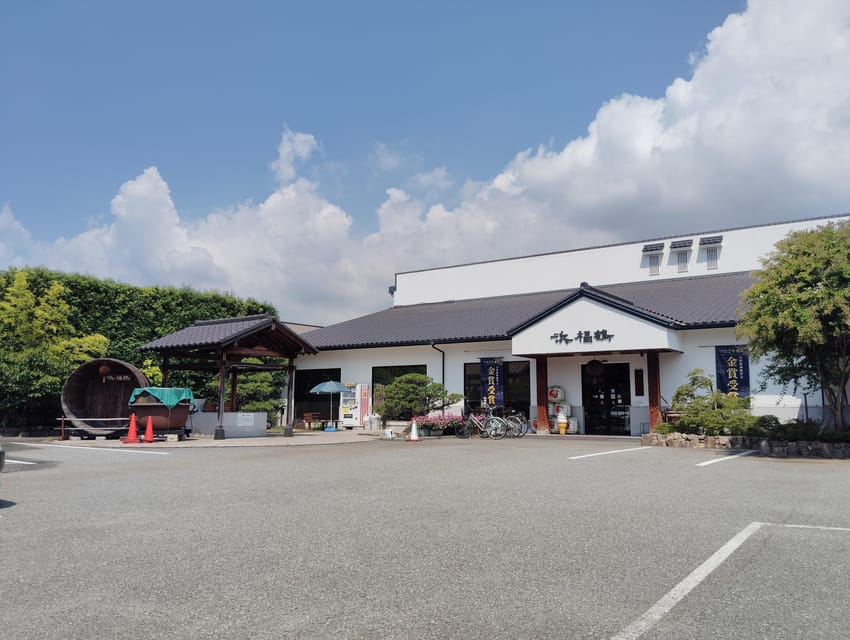
The final tasting stop is Izumisyuzou, reached after a 10-minute walk. Here the focus shifts from sake itself to food made with sake production byproducts. The stop includes a guided visit and food tasting for about 15 minutes.
The featured specialty is Nara-zuke, pickles made from sake lees. Sake lees are the solid material left after pressing fermented mash. Turning them into a preserved food shows how the brewing process reaches beyond the bottle and into everyday local cooking.
This is a small but memorable finish. After five brewery visits, a food tasting gives you a different way to think about sake culture. It also adds texture and flavor to a subject that can otherwise remain mostly liquid and technical.
From Izumisyuzou, you walk about 10 minutes to Shinzaike Station, where the tour ends.
How the walking and timing work
The entire experience lasts 330 minutes, or five and a half hours. That includes the brewery visits, the lunch hour, tastings, explanations, and walks between stops.
The walks are generally short, ranging from five to 15 minutes. Still, they add up. Wear comfortable shoes and treat the route as a walking tour, not a series of drive-up tasting rooms. The start and finish at different stations also mean you should think of the activity as a one-way route through Nada Gogo.
The schedule is briskest at the shorter stops. Hamafukutsuru receives 40 minutes, Kiku-Masamune 30 minutes, and Hakutsuru one hour. Kobe Shushinkan, Konan Muko no Sato, and Izumisyuzou receive about 10 to 15 minutes each. That balance gives you one deeper museum visit, several medium-length tastings, and a few concise comparisons.
I would not book this expecting to linger over every glass. Book it if you want a broad education in one outing. If you prefer to sit at one brewery for an hour with no fixed schedule, this route may feel too structured.
The guides can shape the experience
The guides make a real difference on a route with this much information. Aki has led the tour with a strong grasp of the brewing process and an easy conversational manner. Yoshi is described as informative and humorous, with clear meeting instructions and punctual timing.
Those details matter because sake production can quickly become technical. A guide who can explain the process in plain language helps you remember what you are tasting and why it differs from the previous sample.
Since the group is private, tell your guide what you want from the day. You may care most about brewing methods, local history, food pairing, or choosing bottles to seek out later. The tour includes English and Japanese guiding, so check that your selected language matches your needs when booking.
Is $123 a fair price?
At $123 per person, the price is reasonable if you value structure, guiding, and access to several tasting stops in one route. You are paying for a private guide, tastings at five breweries, a food tasting, and the convenience of having the day arranged from Uozaki to Shinzaike.
The price is less attractive if you mainly want to drink sake. You could spend less by visiting one or two tasting counters on your own, though you would lose the comparisons, explanations, and route planning.
Remember to budget separately for lunch, since the included items list the guide fee and tasting fee but not the meal. You should also consider the value of your time. Five brewery visits in a single half-day would take more planning if you arranged them yourself, especially if you wanted to understand how the producers differ.
The free cancellation window is up to 24 hours before the start, and you can reserve now while paying later. Those terms help if your Kobe schedule is still changing.
Who should book this Kobe sake tour?
I recommend it most for first-time sake drinkers, food-focused visitors, and anyone who wants a clear introduction to Nada Gogo without researching individual breweries. The route gives you context before, during, and after each tasting.
It also suits people who enjoy walking and prefer a private setting. Couples, friends, and small groups can ask questions without waiting for a large group to catch up.
You may want to skip it if you dislike alcohol tastings, want a very slow pace, or prefer to spend the whole day at one museum. The number of stops is the appeal, but it is also the main demand on your attention and energy.
Should you book it?
Book this tour if you want to compare five different sake producers while learning how Nada Gogo became such an important brewing region. The combination of brewery visits, sushi lunch, and Nara-zuke gives the day more range than a simple bar crawl.
I especially like the contrast between the long Hakutsuru museum visit and the shorter producer stops. Add a good guide such as Aki or Yoshi, and you have a practical way to learn what you like before buying sake elsewhere in Japan.
Skip it only if you need an unhurried tasting or want lunch and all expenses bundled into the advertised price. For a structured, private, walking tour with tastings across Kobe’s top sake district, the $123 cost is a fair trade for the time and planning it saves.
FAQ
Where does the sake tour begin?
Meet your guide in front of the Hanshin Uozaki Station ticket gate. The guide will hold a yellow sign with the DeepExperience logo.
Where does the tour finish?
The tour finishes at Shinzaike Station after the final walk from Izumisyuzou.
How long does the experience last?
The tour lasts 330 minutes, which is five and a half hours.
How many breweries will I visit?
You will visit five breweries: Hamafukutsuru Brewery, Kiku-Masamune Shuzo Kinenkan, Hakutsuru Sake Brewery Museum, Kobe Shushinkan, and Konan Muko no Sato.
Is lunch included in the tour price?
Lunch at a local restaurant is part of the schedule, but the included items list only the guide fee and tasting fee. Plan to pay for lunch separately.
Can I take the tour in English?
Yes. Live guiding is available in English and Japanese.
Just added around Japan
- Private Sake Tasting at 300 Years Old Sake Brewery in Tokyo★ 5.0 · 3 reviews
- Takayama: Authentic Sake Tasting at a Historic Brewery★ 5.0 · 65 reviews
- Rural Brewery Town Walk: Half-Day Private Tour Near Kyoto★ 5.0 · 7 reviews
- 1-Day Sapporo Historical Village and Sapporo Beer Museum Tour★ 5.0 · 3 reviews
- Sapporo Tour in the Port City of Otaru and Local beer brewery★ 5.0 · 3 reviews
- Cultural Sake Brewery Private Tour & Unlimited Tasting Near Tokyo★ 5.0 · 4 reviews
- Unique Brewery Tour and One-of-a-Kind Sake Tasting Near Tokyo★ 5.0 · 17 reviews
- Sake “Omakase” in Osaka : Guided Tasting by a Active Sake brewer★ 5.0 · 11 reviews
Kobe Beer Tours, compared.
KOBE Sake Tasting Tour at Breweries (tasting fee included)
Read our review →
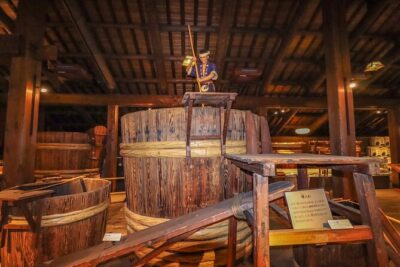
Sake Brewery and Japanese Life Experience Tour in Kobe
Read our review →
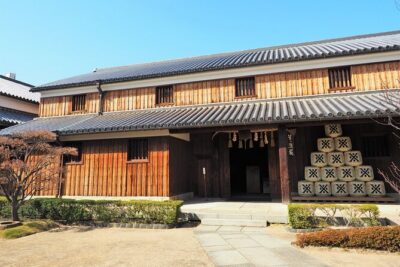
Exploring Nada Sake Breweries Kobe Private Tour with Government-Licensed Guide
Read our review →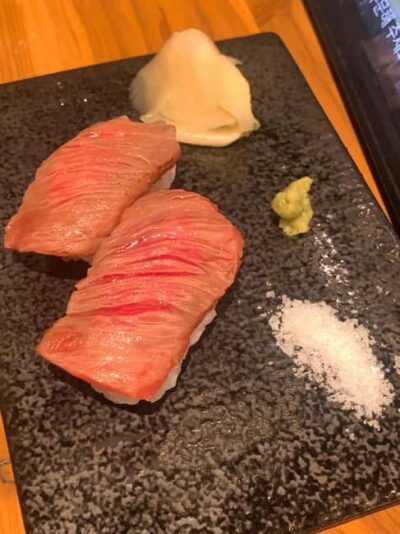
Sake Brewery Tour with Tasting and Kobe Beef Bites
Read our review →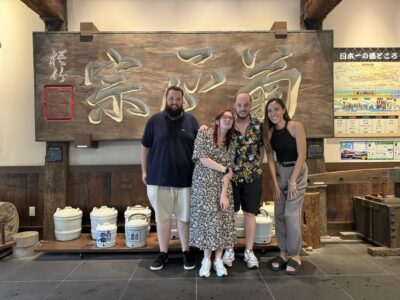
3-Hour Private Sake Tour in Japan’s Top Sake Area
Read our review →Browse the lists this tour appears in