

REVIEW · JAPAN
Osaka: Okonomiyaki Cooking Class with Beer or Soft Drink
Osaka’s favorite soul food becomes your lunch or dinner project in this one-hour okonomiyaki class. You choose from 10 variations, mix the ingredients, cook your own pancake, and eat it hot with a Japanese beer or soft drink. The small group size keeps the lesson personal and easy to follow.
I like the friendly, hands-on format, which works well for children, couples, and adults who want more than a meal. I also like the chance to learn about Osaka and the history of okonomiyaki while you cook. The main limitation is that the class is short, and people with gluten intolerance or wheelchair users cannot take part.
Key points to know before booking

- Small groups of up to four: You get close guidance rather than a crowded demonstration.
- Ten okonomiyaki variations: Choose ingredients and make a version that suits your taste.
- A practical cooking lesson: The instructor explains each step clearly, so you can try making the dish at home.
- Food, drink, and instruction included: You receive one okonomiyaki, all ingredients, and a Japanese beer or soft drink.
- Easy meeting point: Find your English-speaking guide on the ground floor of Nakatsu Station at Exit 3.
- Best for food lovers and families: Children and adults can cook together, but the class is not suitable for wheelchair users or people with gluten intolerance.
Why this short Osaka class works so well
Okonomiyaki is often called a Japanese savory pancake, but that description only gets you partway there. It is a warm, filling dish built around a batter and a choice of ingredients, then cooked and finished to your taste. In Osaka, it is everyday comfort food, not a formal restaurant ritual.
This class gives you a direct way to understand the dish. You do not simply sit down and receive a finished plate. You choose your variation, follow the preparation, and watch the food become your meal. That small act changes how you think about okonomiyaki. You notice the texture, the balance of ingredients, and the cooking method because you took part in each step.
The lesson is especially useful if you want an activity that fits into a busy Osaka schedule. At one hour, it will not take over your day. You can place it between sightseeing stops, use it as a relaxed lunch, or book it for an early evening meal. The compact format also makes it easier for families who may not want to commit to a long cooking workshop.
The class is conducted in English and Japanese. The instructor explains the process carefully, and the strongest praise centers on patience, warmth, and clear directions. One couple even arrived late and found the instructor willing to wait and continue with a calm attitude. That matters in Osaka, where a missed train connection or a confusing station exit can throw off your plans.
More Cooking Classes in Japan:
- Santorini: Cooking Class with a Chef at the Ftelos Brewery
★ 4.8 · 33 reviews - Private Market Tour, Cooking Class in Mexico City with Alex & Ale
★ 5.0 · 25 reviews - Rome: Pasta and Gelato Cooking Class with Wine or Beer
★ 4.7 · 20 reviews
Meeting your guide at Nakatsu Station Exit 3
Your meeting point is the ground floor of Nakatsu Station on the Midosuji Subway Line, at Exit 3. The English-speaking guide waits there to meet you before taking you into the cooking experience.
Give yourself enough time to find the correct station and exit. Osaka has several stations with similar names, and Nakatsu on the Midosuji Line is the location specified for this class. Check the station name before leaving your hotel, and keep the meeting instructions handy on your phone.
The meeting point is practical because it avoids a vague neighborhood rendezvous. You do not need to search for a restaurant among many storefronts or guess which entrance to use. Just reach Exit 3 on the ground floor and look for your guide.
The group is limited to four people. That is a major advantage here. In a large class, cooking instruction can turn into a quick demonstration followed by a struggle to see the cooking surface. With four or fewer participants, you have a better chance to ask questions, watch the technique, and receive help when you need it.
The small setting also suits families and couples. You can cook together without feeling lost in a crowd. It has the feel of a personal food lesson rather than a staged group show.
The opening lesson: Osaka, okonomiyaki, and local food culture
The class begins with an introduction to okonomiyaki and its place in Japanese food culture. Your instructor explains the history of the dish while preparing you for the cooking steps.
This part adds useful context without requiring a long lecture. You learn why okonomiyaki is tied so closely to Osaka and why it is often treated as soul food. The dish is flexible by nature, so the choice of ingredients is central to the experience. It is not about following one rigid recipe. It is about building a pancake that fits your taste.
The food conversation is one of the class’s strongest features. You can ask about Osaka, Japanese cuisine, and daily life in Japan while working with the ingredients. The language support is in English and Japanese, so you do not need to speak Japanese to follow the lesson.
I would pay attention during this opening section rather than treating it as an introduction to get through quickly. The history helps explain why okonomiyaki is such a good cooking-class dish. It is approachable, adaptable, and social. The result is not meant to be admired from a distance. It is meant to be made, shared, and eaten hot.
Choosing one of ten okonomiyaki variations
After the introduction, you choose your preferred variation from a total of 10 options. The supplied information does not list every variation, so you should not expect to select ingredients outside the choices offered on the day. Still, having 10 versions gives you room to make a personal choice.
This is useful if your group has different tastes. One person may prefer a familiar combination, while another may want to try something new. Children can take part in choosing their ingredients, which gives them a simple role before the cooking begins.
The selection also makes the class more than a fixed recipe demonstration. You are not all being handed exactly the same dish. Your okonomiyaki becomes your own version, within the available menu of choices.
If you have a serious food restriction, read the suitability information carefully before booking. The class is not suitable for people with gluten intolerance. The activity information does not provide a full allergen breakdown, so do not assume that the available variations can be adjusted for every dietary need.
More Workshops in Japan:
- Bruges: Belgian Waffle-Making Workshop with Beer Tasting
★ 4.9 · 960 reviews - The Waffles ‘n Beer Workshop in Bruges Centre
★ 5.0 · 429 reviews - Brussels: Belgian Waffle Making Workshop with Beer Tasting
★ 4.9 · 308 reviews - Ghent: Belgian Waffle-Making Workshop with Beer Tasting
★ 4.8 · 256 reviews
Cooking your own pancake with close guidance
The instructor walks you through the preparation and cooking process. You do not need advanced cooking skills, and the lesson is designed to be easy to follow. Clear, simple instructions are a repeated strength of the experience.
That hands-on element is where the class earns its price. You are not just paying for an okonomiyaki meal. You are receiving instruction, ingredients, personal guidance, and a chance to repeat the method at home. If you enjoy cooking, you may find the lesson more useful than a standard restaurant meal at a similar price.
The instructor stays involved as you work. If you are unsure about a step, you can ask for help rather than trying to copy a technique from across a busy room. The group size of four supports this personal attention.
The cooking stage is also suitable for mixed-age groups. Adults can handle the more delicate parts of the preparation, while children can participate in choosing ingredients and following simple steps. You should still use normal care around hot cooking equipment, and parents will need to stay attentive to younger children.
One practical point: the class lasts only one hour. That keeps the experience light and manageable, but it also means the cooking pace is likely to be focused. You will have time to learn the core method, not a long chef-training session covering many separate Japanese dishes.
Eating the finished okonomiyaki hot
Once your pancake is ready, it is served hot for you to enjoy. Each participant receives one okonomiyaki, along with a choice of Japanese beer or a soft drink.
The drink pairing is a simple but welcome touch. Beer suits the salty, savory character of okonomiyaki, while a soft drink gives children and non-drinkers an easy alternative. The included beverage also means you can sit down and enjoy the finished dish without adding another purchase to the bill.
The food is the main reward for the work. You have selected the variation, helped prepare it, and watched it cook. That makes the finished plate feel more satisfying than an ordinary meal ordered from a menu.
The dish is described as delicious and filling, and the food itself receives consistent praise. You should expect a casual meal rather than a refined tasting menu. This is comfort food, served hot and enjoyed soon after cooking.
If you are booking for a full meal, remember that the package includes one okonomiyaki per participant. The activity does not state that additional dishes or drinks are included. For most people, one pancake should form the heart of a meal, but very hungry diners may want to plan another snack later.
The personal side of the experience

The warm interaction with the instructor is one of the clearest reasons to choose this class. The teaching style is described as patient, caring, and easy to understand. That makes a difference in a cooking activity, where a rushed explanation can leave you watching instead of taking part.
You can also use the class as a chance to talk about Osaka and Japan. The conversation is not limited to ingredients and cooking technique. It can include local food, Japanese life, and the story of okonomiyaki.
The setting is intimate, with no more than four participants. That helps if you prefer a quiet activity and want to ask questions. It may be less appealing if you are looking for a loud, social party atmosphere with a large group. The experience leans toward personal conversation and practical instruction.
One especially nice detail is the welcoming attitude toward late arrivals. The instructor has waited for delayed participants and remained patient while getting them settled. You should still aim to arrive on time, but this flexibility can reduce stress when Osaka transport does not go exactly to plan.
The cooking space has also been described as clean and tidy. That is worth noting in a food activity. A well-kept workspace makes it easier to focus on the ingredients and feel comfortable handling the meal you will eat.
Is $51 a fair price for one hour?

At $51 per person, this is not the cheapest way to eat okonomiyaki in Osaka. If you only want a plate of food, a casual restaurant will likely cost less. The value comes from the combination of the meal, drink, ingredients, instruction, cultural explanation, and small group setting.
You receive one okonomiyaki, a Japanese beer or soft drink, a choice of 10 variations, and personal help from an experienced instructor. For a couple or family, the price buys a shared activity as well as dinner. You leave with a method you can try at home, which gives the experience more lasting value than a meal that ends when you leave the table.
I think the price makes the most sense for first-time visitors who want an easy introduction to Osaka food culture. It is also a good choice if you value personal attention and do not want to spend half a day in a cooking school.
The value is weaker if you already know how to make okonomiyaki, have a tight budget, or want a longer class with several dishes. The one-hour limit keeps the activity convenient, but it also limits how much cooking technique you can cover.
You can reserve now and pay later, which helps if your Osaka schedule is still changing. Cancellation is free up to 24 hours before the activity for a full refund. Those terms are useful when you are arranging several timed activities during a Japan trip.
Who should book this class?
I would recommend it to couples who want a relaxed food activity, families looking for something children can join, and solo visitors who enjoy small-group instruction. It also suits anyone who wants to learn a dish that can be repeated at home.
The class works particularly well for:
- First-time visitors to Osaka
- People curious about Japanese comfort food
- Families with children
- Couples seeking a shared meal activity
- Cooks who want a simple dish to recreate at home
- Visitors who prefer English-language instruction
You should think twice if you need wheelchair access or must avoid gluten. Electric wheelchairs are not permitted, and the experience is not suitable for wheelchair users. Explosive substances are also not allowed, though that will rarely affect an ordinary sightseeing plan.
The class is also less suitable if you want a full cooking curriculum. You will focus on okonomiyaki, not a broad menu of Japanese dishes. That narrow focus is part of the charm, but it is important to know what you are booking.
My verdict on the Osaka okonomiyaki class
Book this experience if you want to eat Osaka food and understand it by making it yourself. The strongest points are the small group of four, the patient instruction, the choice of 10 variations, and the easy conversation about Osaka and Japanese life.
The one-hour length keeps the class convenient, while the included drink and meal make the $51 price reasonable for an activity rather than a simple restaurant visit. I would choose it for a family afternoon, a couple’s food stop, or a first introduction to Osaka cuisine.
Skip it if you only want the lowest-cost meal, need gluten-free food, use a wheelchair, or hope to learn several Japanese recipes in one session. For everyone else, this is a friendly, practical way to turn a famous Osaka dish into a shared memory and a recipe you can try again at home.
FAQ
Where does the okonomiyaki class meet?
Meet your English-speaking guide on the ground floor of Nakatsu Station on the Midosuji Subway Line, at Exit 3.
How long does the cooking class last?
The class lasts one hour.
How many people can join the class?
The group is limited to four participants.
Is the class available in English?
Yes. The instructor speaks English and Japanese.
What is included in the price?
The price includes the okonomiyaki cooking class, all necessary ingredients, a choice of 10 variations, personal guidance, one okonomiyaki per participant, and a Japanese beer or soft drink.
Is the activity suitable for people with gluten intolerance or wheelchair users?
No. The activity is not suitable for people with gluten intolerance or wheelchair users. Electric wheelchairs are also not allowed.
Just added around Japan
- Private Sake Tasting at 300 Years Old Sake Brewery in Tokyo★ 5.0 · 3 reviews
- Takayama: Authentic Sake Tasting at a Historic Brewery★ 5.0 · 65 reviews
- Rural Brewery Town Walk: Half-Day Private Tour Near Kyoto★ 5.0 · 7 reviews
- 1-Day Sapporo Historical Village and Sapporo Beer Museum Tour★ 5.0 · 3 reviews
- Sapporo Tour in the Port City of Otaru and Local beer brewery★ 5.0 · 3 reviews
- Cultural Sake Brewery Private Tour & Unlimited Tasting Near Tokyo★ 5.0 · 4 reviews
- Unique Brewery Tour and One-of-a-Kind Sake Tasting Near Tokyo★ 5.0 · 17 reviews
- Sake “Omakase” in Osaka : Guided Tasting by a Active Sake brewer★ 5.0 · 11 reviews
Japan Beer Tours, compared.

Insider Sake Brewery Tour with Sake and Food Pairing
Read our review →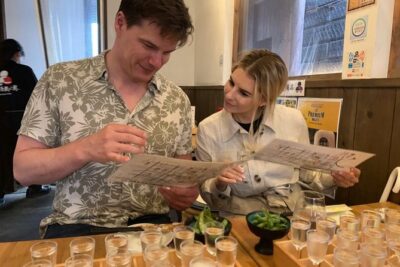
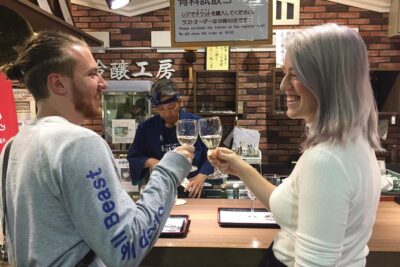
KOBE Sake Tasting Tour at Breweries (tasting fee included)
Read our review →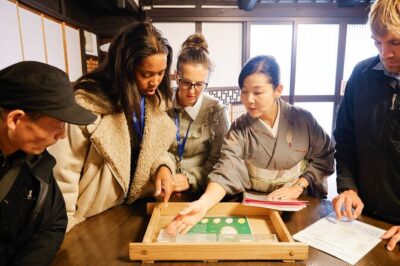
Hiroshima Saijo Sake Tasting Tour with visit to 7 Breweries
Read our review →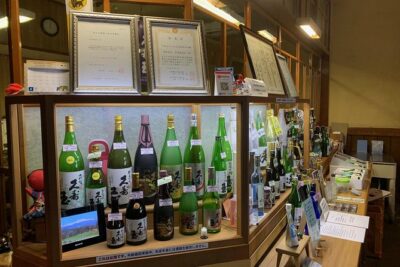
Takayama: Authentic Sake Tasting at a Historic Brewery
Read our review →
Private Sake Brewery Visit and Tasting Tour in Hida
Read our review →
Browse the lists this tour appears in